Scotland Was Ready

One evening on our recent historical tour and holiday in the north-eastern United States, we were a little pushed for time, so we stopped at Domino’s for a takeaway pizza.
As we placed our order and had a wee chat, the young man behind the counter asked for my name.
“Watson,” I replied.
A little while later, I glanced up at the tracker board to see how our order was progressing.
I looked for Watson.
Nothing.
I looked again.
Still nothing.
Then I spotted it.
π’π‚πŽπ“π‹π€ππƒ.
Apparently, somewhere between the counter and the computer, my surname had become an entire country…!
For the next few minutes, I found myself strangely invested in Scotland’s progress as it moved from Placed to Make and finally to Ready.
With Scotland’s first football match only days away at the World Cup, I was delighted to see we were performing well.
Eventually, the call came:
“Scotland!”
And proudly, I stepped forward to collect our pizza on behalf of the nation.
It made me smile, but it also reminded me of something simple.
People like to be known.
A name really does matter.
My experience is simply this – the best leaders make people feel seen, remembered and valued.
Although, to be fair, if someone can’t remember your name, being remembered as an entire country isn’t a bad consolation prize! πŸ˜†
Come on Scotland!!!
Question: Who could you help feel seen and valued today? πŸ•πŸ΄σ §σ ’σ ³σ £σ ΄σ Ώ

Duct Tape Leadership

There are moments in life when you begin to realise just how important your particular seat on an aeroplane has become.
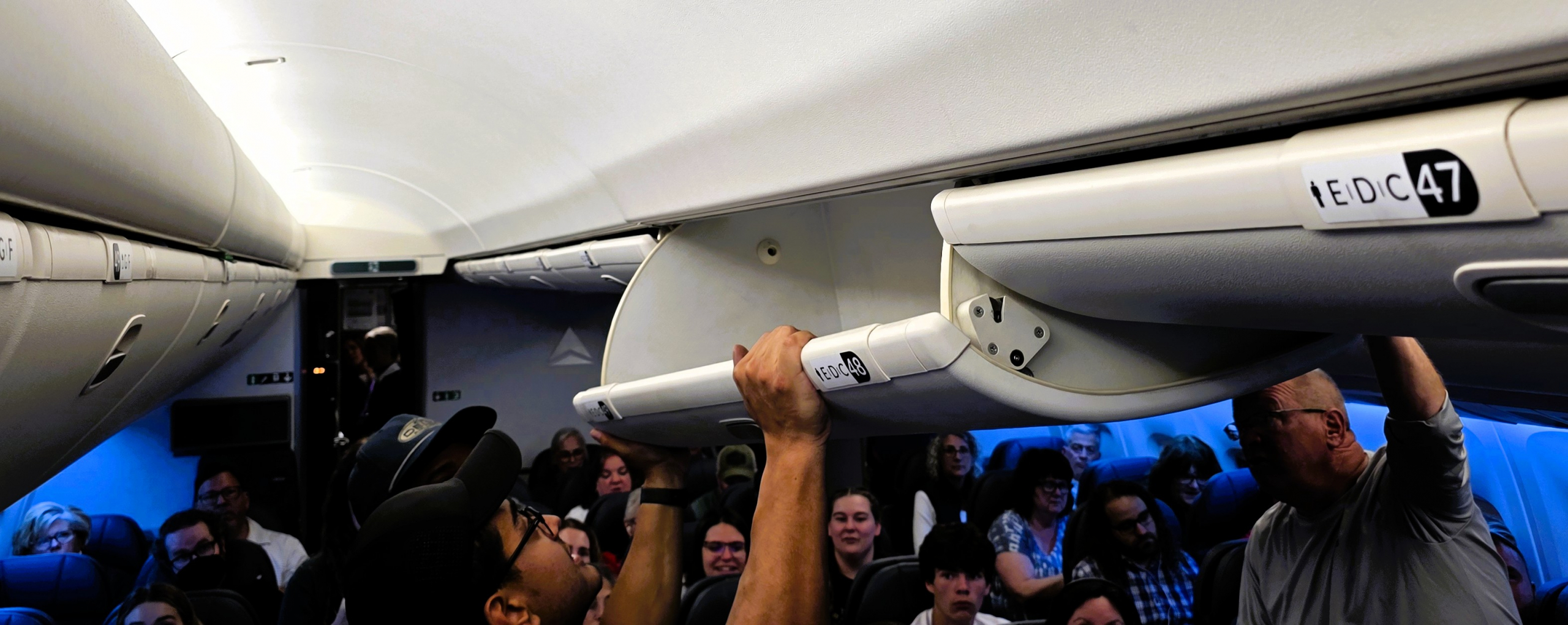
A couple of days ago, on our Delta flight home from Atlanta, Georgia, that seat happened to be mine, 48E. Or, more precisely, the overhead bin directly above it.
The plane was full. Everyone was seated and the flight was due to depart at 10.50pm. It was now 11.20 pm local time. Most of us were tired, increasingly hungry, and rather keen to begin the journey home.
There was only one small problem.
The overhead bin above my seat would not close. 🀨
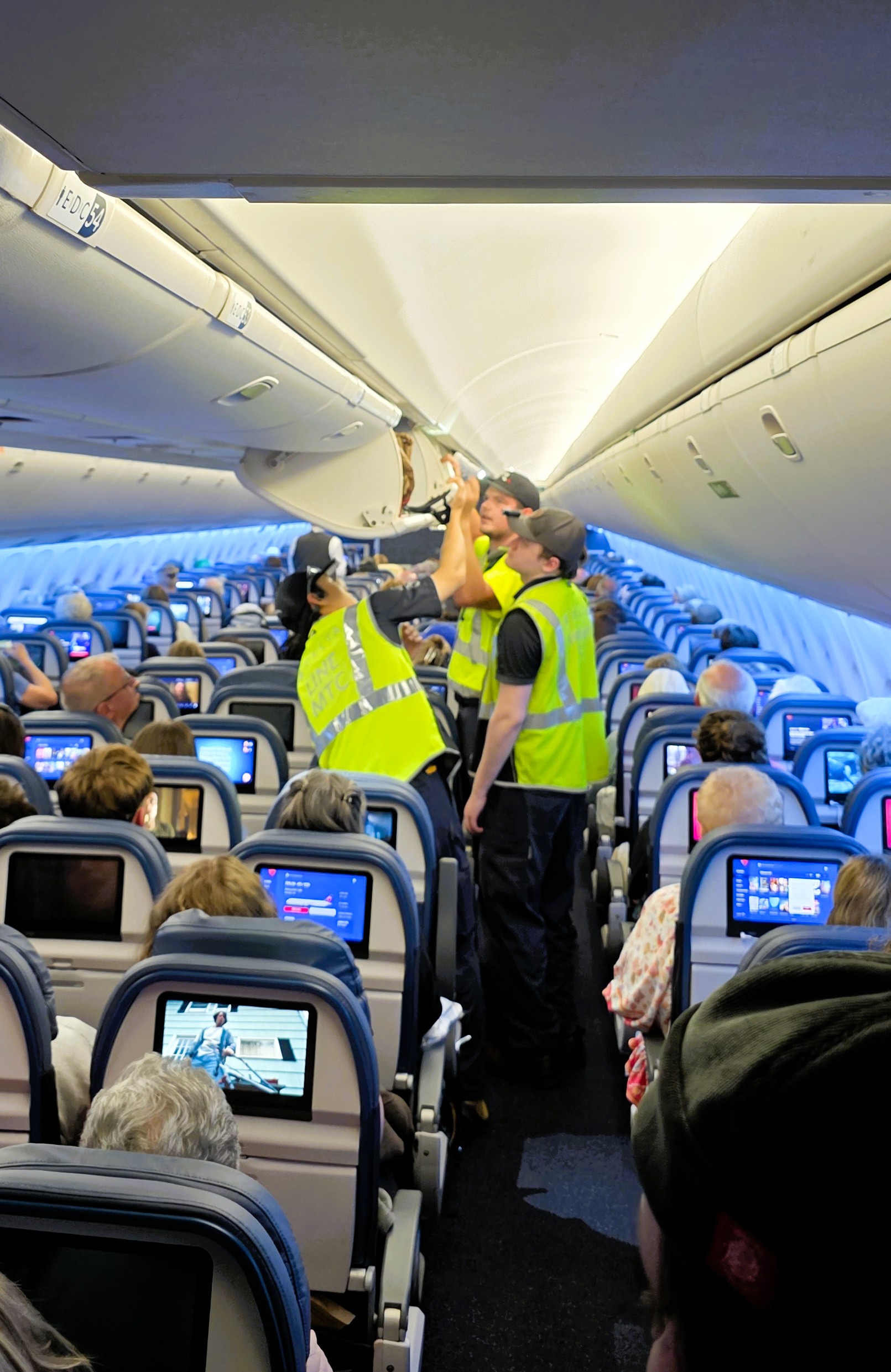
At first, one member of staff appeared. Then another. Then another. And then another.
Before long, four mechanics were gathered in the aisle, carefully examining the offending compartment.
There were tools, torches, discussions, puzzled expressions and several increasingly determined attempts to persuade it to cooperate.
The passengers around me became quite invested in the outcome.
It felt a little like watching a particularly tense episode of The Repair Shop, except we were all trapped inside the workshop, with little progress being made.
Of course, safety matters. I was genuinely grateful that the crew took the problem seriously.
However, there was still something quite amusing about the situation.
A large aircraft. Sophisticated technology. Highly trained pilots. Hundreds of passengers. The ability to fly thousands of miles across an ocean.
And the one thing standing between us and Scotland was a cupboard door above seat 48E.
After more than an hour, several tools and a fair amount of brute force, the breakthrough finally came.
The magic solution?… Tape. Lots of tape.
The bin was sealed shut, labelled β€œUNSERVICEABLE – DO NOT USE”, and quietly retired from active duty for the flight.
It turns out the answer to the question, β€œHow many mechanics does it take to close an overhead bin?” is: Four mechanics, one hour, a couple of metres of tape – and a formal retirement notice for a cupboard door.
There was a wee leadership lesson in it too.
Not every problem needs an elegant solution straight away.
Sometimes good leadership is about making things safe, keeping people moving and fixing it properly later.
What are you overcomplicating that may simply need a practical next step?

A Pilgrimage of Faith

Several times over these last few days, my attention has been drawn to the year 1620, the Pilgrim Fathers, the Mayflower, religious freedom, and liberty.
Looking back has helped me look forward.
A pilgrim is “a person who journeys to a sacred place for religious reasons.”
In Latin, it comes from the word peregrinus, meaning “one who has come from afar.”
Pilgrimages have long been a common feature of many world religions, including Christianity, Judaism, Islam, Buddhism, Hinduism, and Shinto. Today, millions of people make pilgrimages to a wide array of holy sites every year.
It got me thinking about our recent trip to the United States and my own pilgrimage through life.
A pilgrimage is a journey to a holy place which, for some, leads to personal transformation. The pilgrim then returns to daily life with renewed purpose, perspective, and understanding.
I have spent a lifetime studying the teachings and doctrines of The Church of Jesus Christ of Latter-day Saints, and these last few days on a remarkable Church history tour with 116 youth have strengthened and reaffirmed my deeply held beliefs and convictions.
As we visited sacred sites connected with the Restoration of the Gospel of Jesus Christ, as long promised from holy scripture, I found myself reflecting on those early pilgrims who crossed the Atlantic seeking the freedom to worship according to the dictates of their conscience. Their courage helped establish principles of religious liberty that would later create an environment where the Restoration of the gospel could take place.
In many ways, Joseph Smith was also a pilgrim. He sought truth. He asked questions. He desired to know God’s will and was willing to act on the answers he received. His journey led to sacred experiences that continue to bless millions of lives throughout the world.

Priesthood Restoration

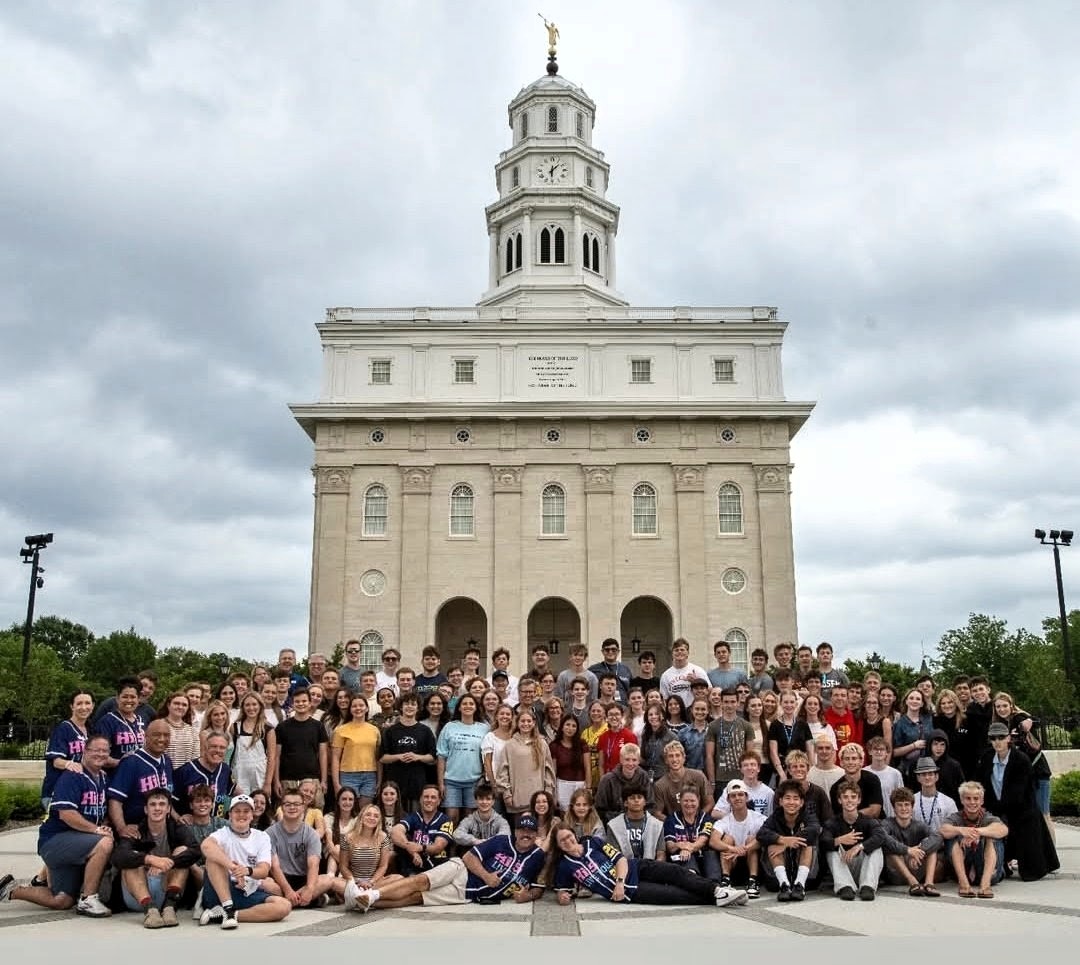
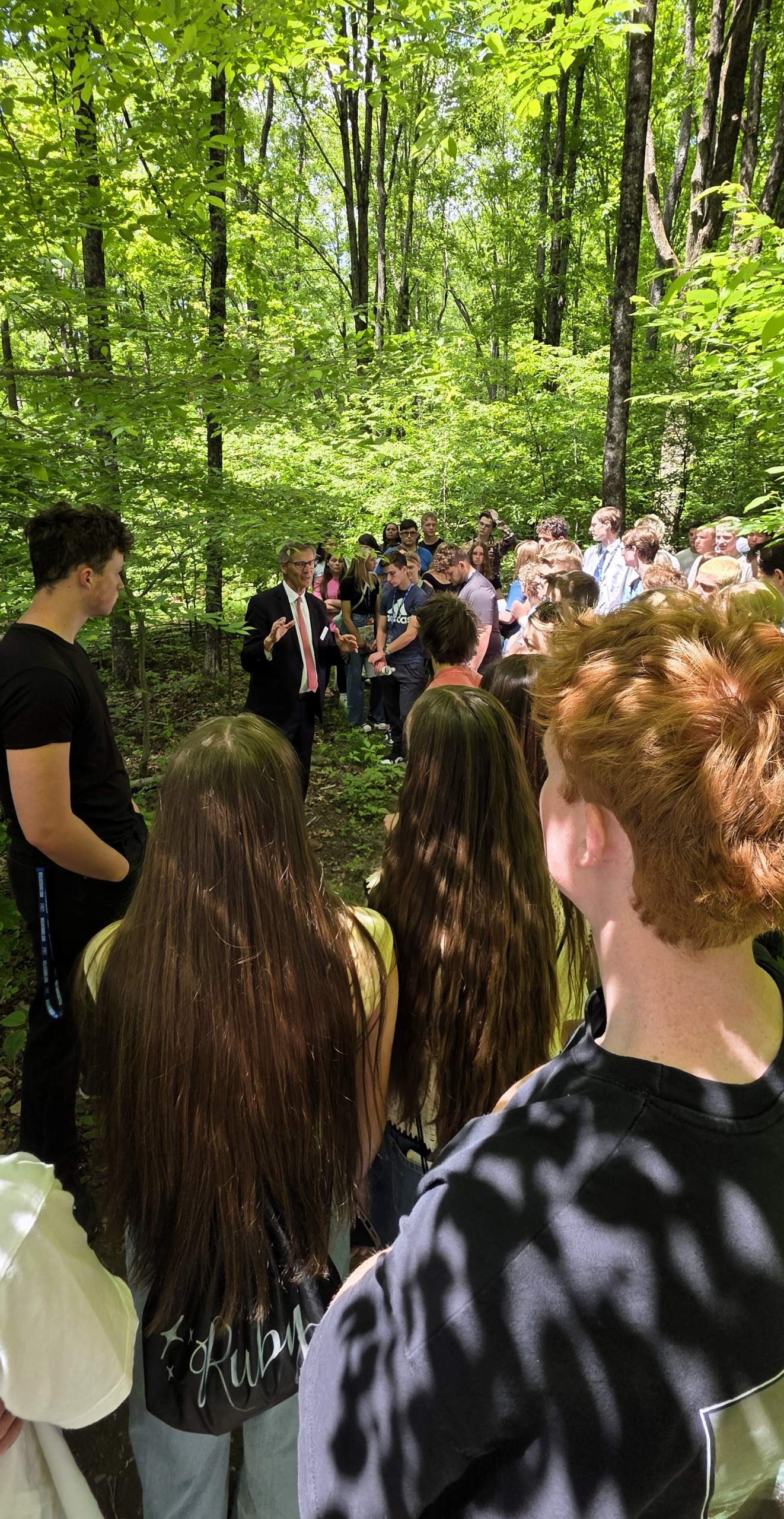
One photograph from our visit to the Priesthood Restoration Site captures much of what I have been feeling.
As I look at this photograph, I am struck by the contrast between the bronze figures behind us and the young faces in front of us.
The statues commemorate a sacred moment in history. The youth gathered before it represent the future. Between those two groups stands my own generation, entrusted with preserving faith, sharing testimony, and helping others find their way.
For me, that is one of the great lessons of pilgrimage: we look back to sacred events not merely to remember them, but to carry their influence forward into our own lives and into the lives of those who follow us.
The events commemorated at that sacred place occurred nearly two hundred years ago, yet their influence continues to shape lives today. Standing there with the young people, I was reminded that every generation must make its own pilgrimage. We can visit the sacred sites, walk the same paths, and learn the same history, but ultimately each of us must gain our own witness.
My hope is that, for these youth, this journey will become more than a memorable trip. I hope it will become a milestone in their own lifelong search for truth, faith, and discipleship.
As for me, this pilgrimage has been both a confirmation and a reminder. A confirmation of truths I have long believed, and a reminder that faith is not a destination but a journey. We are all pilgrims, each seeking greater light, greater understanding, and a closer relationship with God.
Like those who sailed on the Mayflower, and like those who sought truth during the Restoration, we continue our journey forward, guided by faith, strengthened by sacred experiences, and grateful for those who have gone before us.
Looking back has indeed helped me look forward.
As you continue your own journey through life, what sacred experiences from your past can help you look forward with greater faith, purpose, and hope?


Beauty Born of Sacrifice

These last few days have been quite incredible, but yesterday in Carthage and Nauvoo was particularly memorable.
As a member of The Church of Jesus Christ of Latter-day Saints, I have studied, taught, and reflected on the events that took place in these sacred locations for many years. Yet being there in person brought a depth of understanding and feeling that is difficult to describe.

Carthage

We began the day in Carthage.
Carthage Jail is the place where Joseph and Hyrum Smith were martyred on 27 June 1844. It was a sobering experience to be there.
To walk where they walked, to sit where they sat, and to stand in the room where they spent their final hours. Seeing the bullet hole that remains in the door brought the reality of those events into sharp focus.
As our group of twenty-five gathered in that upper room, we sang together “A Poor Wayfaring Man of Grief,” the hymn that John Taylor sang shortly before the attack on the jail.
The experience was deeply moving.
A beautiful stillness filled the room. Reverence settled upon us as the story of that terrible day was retold. The Spirit was present in a powerful way, and all of us felt the sacredness of the place and the significance of what had occurred there.
As I sat quietly and reflected, the sadness of what happened in that room weighed heavily upon me. Yet at the same time, my heart was filled with an overwhelming confirmation that Joseph Smith was indeed a prophet of God.
It was a deeply sacred moment. In the very place where he and his brother Hyrum gave their lives, I felt a powerful and unmistakable witness of his divine calling. It was not something I heard or saw, but something I felt deeply within my heart. The sorrow of the martyrdom and the certainty of that spiritual confirmation seemed to come together in a way I will never forget.

Nauvoo

From Carthage, we travelled to Nauvoo.
Nauvoo was beautiful.
Seeing the restored Nauvoo Temple in all its majesty was simply incredible. Several times throughout the day I found myself asking, “How on earth did the early Saints manage to build such a magnificent structure in the early 1840s?”
The temple stands as a remarkable testament to their faith, sacrifice, and devotion. As I looked at its beauty, I could not help but think of the hardship that accompanied its construction.
These faithful Saints gave so much to build a house for the Lord, only to be forced to leave it behind.
Within a short time, many would cross the Mississippi River in the bitter cold of February 1846, fleeing persecution and mobs, uncertain of what lay ahead but determined to follow their faith.
The contrast was striking.
Such beauty born from such sacrifice.
While in Nauvoo, we also had the opportunity to meet with one of our former missionaries from our time serving in Belgium and the Netherlands, Brigitta Broadbent. What a joy it was to spend time together, catch up on her life, and reminisce about treasured memories from our years of service.
As the day came to an end, I found myself reflecting on the faith of those early Saints. Their sacrifices were immense. They endured hardship, persecution, and loss, yet remained steadfast in their devotion to the Lord and His gospel.
Yesterday was much more than a visit to important historical sites. It was a day of reflection, remembrance, gratitude, and spiritual confirmation.
I left Carthage with a renewed testimony and a heart full of gratitude.
I left Nauvoo inspired by the faith, sacrifice, and resilience of those who built a city, raised a temple to God, and then left it all behind in order to follow Him.
It is a day many will never forget.
What spiritual experiences have strengthened your own testimony in unexpected ways?

The Stones Remain

One of our favourite experiences over the last few days has been spending a wee bit of time again with my missionary companion Marty Andrews and his wife Wendy.
Each day we carve out an hour or two to spend together.
One favourite moment for Marty and me was at the Palmyra, New York Temple, overlooking the Sacred Grove and the Joseph Smith Family Home.
Forty-one years ago, in a small, forested area near Saffron Walden in England, as young missionaries, Marty and I shared a moment that was sacred to us as we knelt in prayer together.
There were no heavenly manifestations like those experienced by Joseph Smith, but there came a powerful and unmistakable knowledge that the work in which we were engaged was indeed true.
And now, four decades later, we found ourselves walking together through another forest, this time beside the temple in Palmyra.

Memories

As we walked, memories and tears flooded back. We were overwhelmed by our thoughts and emotions as we embraced and reflected on the sacred nature of all that had happened in our lives since those early days as missionaries.
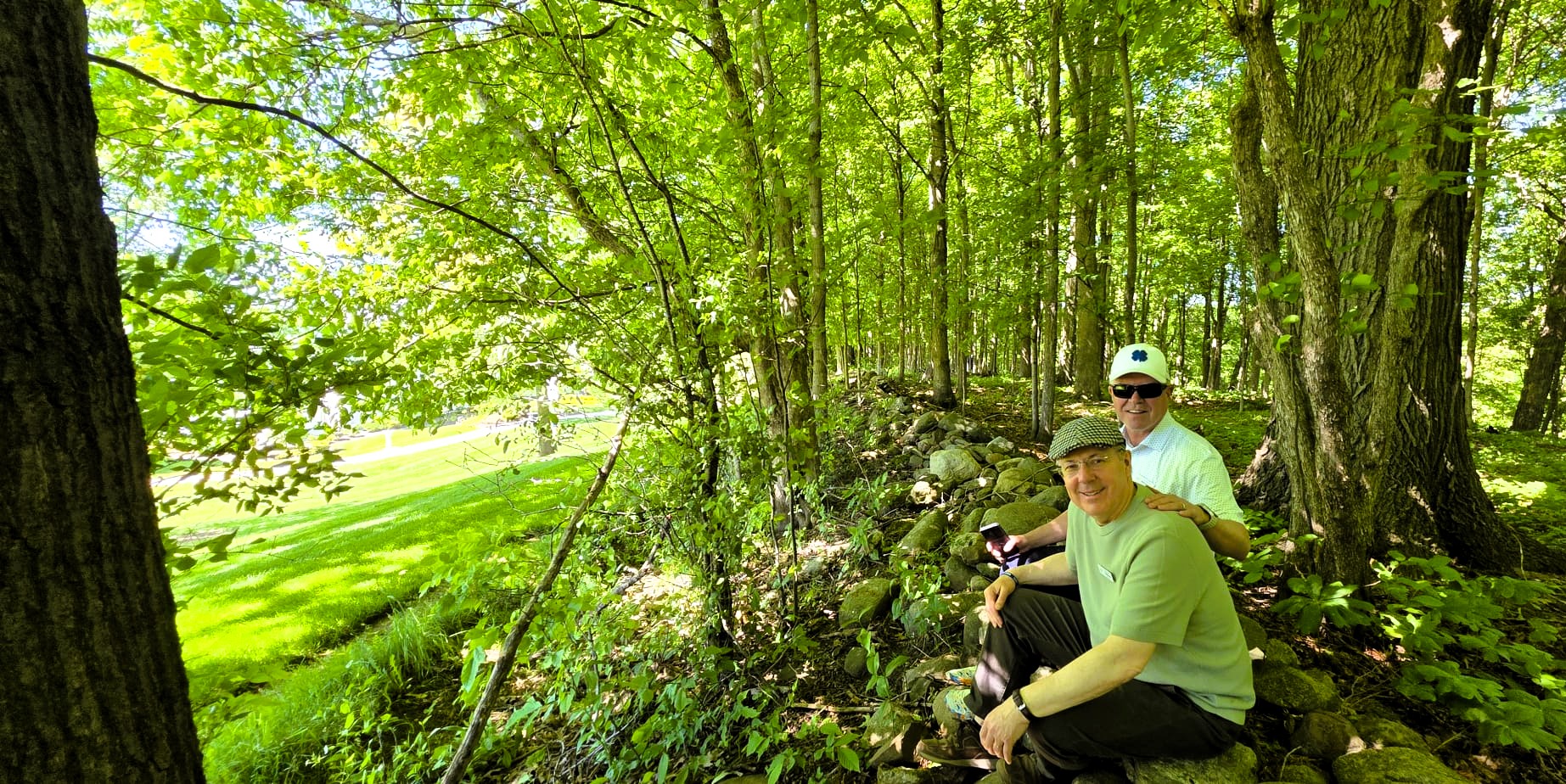
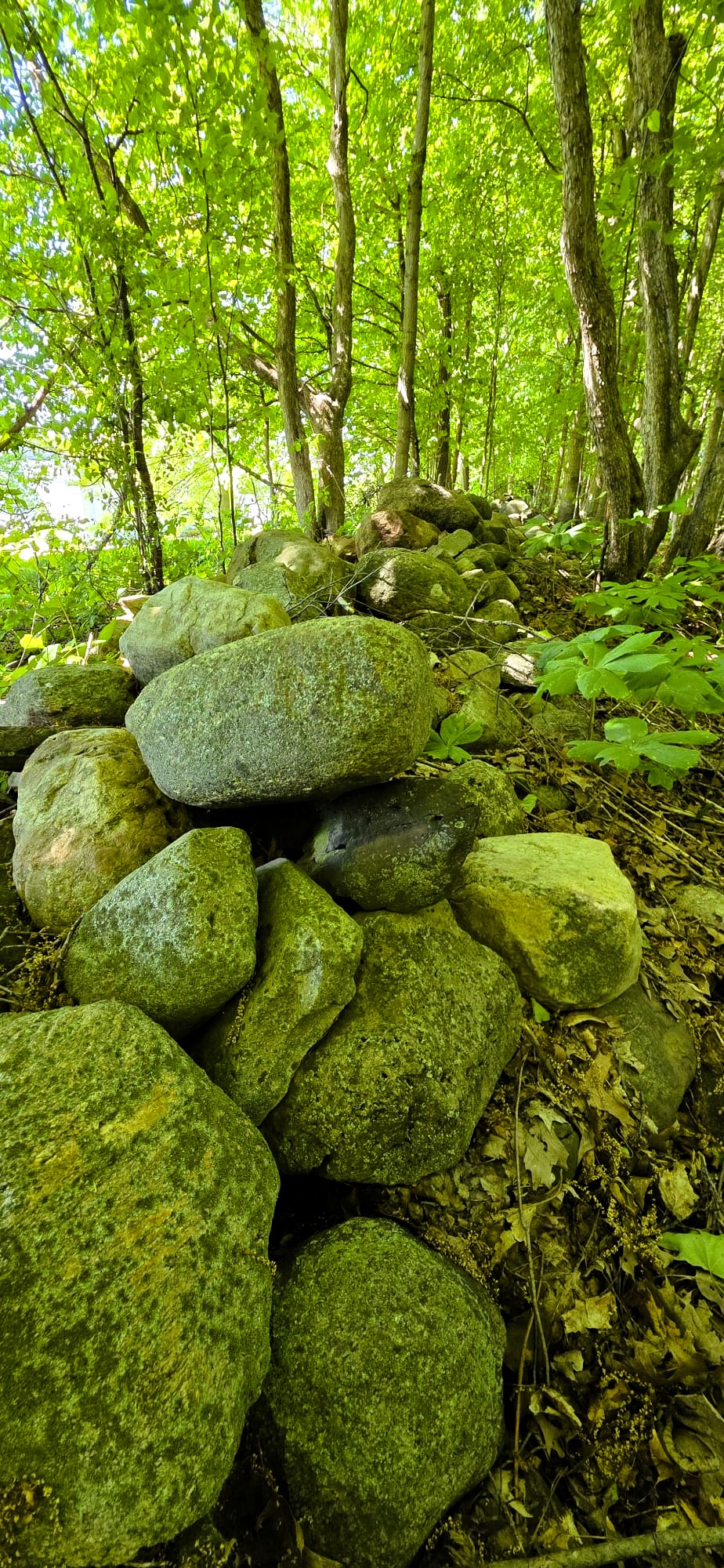
Marty explained the significance of a line of stones piled together along the edge of the forest. Just over 200 years ago, as recorded in journals of the day, Joseph Smith and members of his family cleared that very land in preparation for planting crops. The stones they removed were gathered and placed along the boundary of the field.
Resting there on the edge of the forest, they looked almost like a defensive wall.
We gazed upon the stones for a while and sat upon them considering what message there was in that moment for us.
For nearly two centuries those stones have remained where they were placed.
Generations have come and gone. Seasons have changed. Storms, snow and sunshine have all left their mark. Yet the stones remain.
We could only imagine the toil and sacrifice required to clear that land. Day after day, Joseph and his family would have lifted countless stones from the soil, carrying them one by one to the edge of the field. It must have been demanding work, but necessary if something worthwhile was to grow.

Testimonies

As we sat there, I wondered if testimonies are built in much the same way.
Rarely are they formed in a single dramatic moment. More often they are built stone by stone through prayer, service, scripture study, obedience, sacrifice and countless small acts of faith. Over time, those experiences are gathered together until they form something strong enough to withstand the seasons of life.
Much has changed since our prayer together in 1985 in Saffron Walden. Life has brought joy and sorrow, success and disappointment, unexpected blessings and difficult challenges. Yet the witness we received that day remains.
Perhaps that is one of the purposes of sacred experiences. They become spiritual stones of remembrance that we can return to throughout our lives, reminding us of what we once knew and still know to be true.
As Marty and I sat together on those old stones overlooking the temple and the Sacred Grove, we felt grateful – not only for testimonies that have endured, but for a friendship that has flourished.
Some things, when built upon a sure foundation, grow stronger with time.
Which experiences have become the foundation stones of your testimony?

It’s Not About the Price

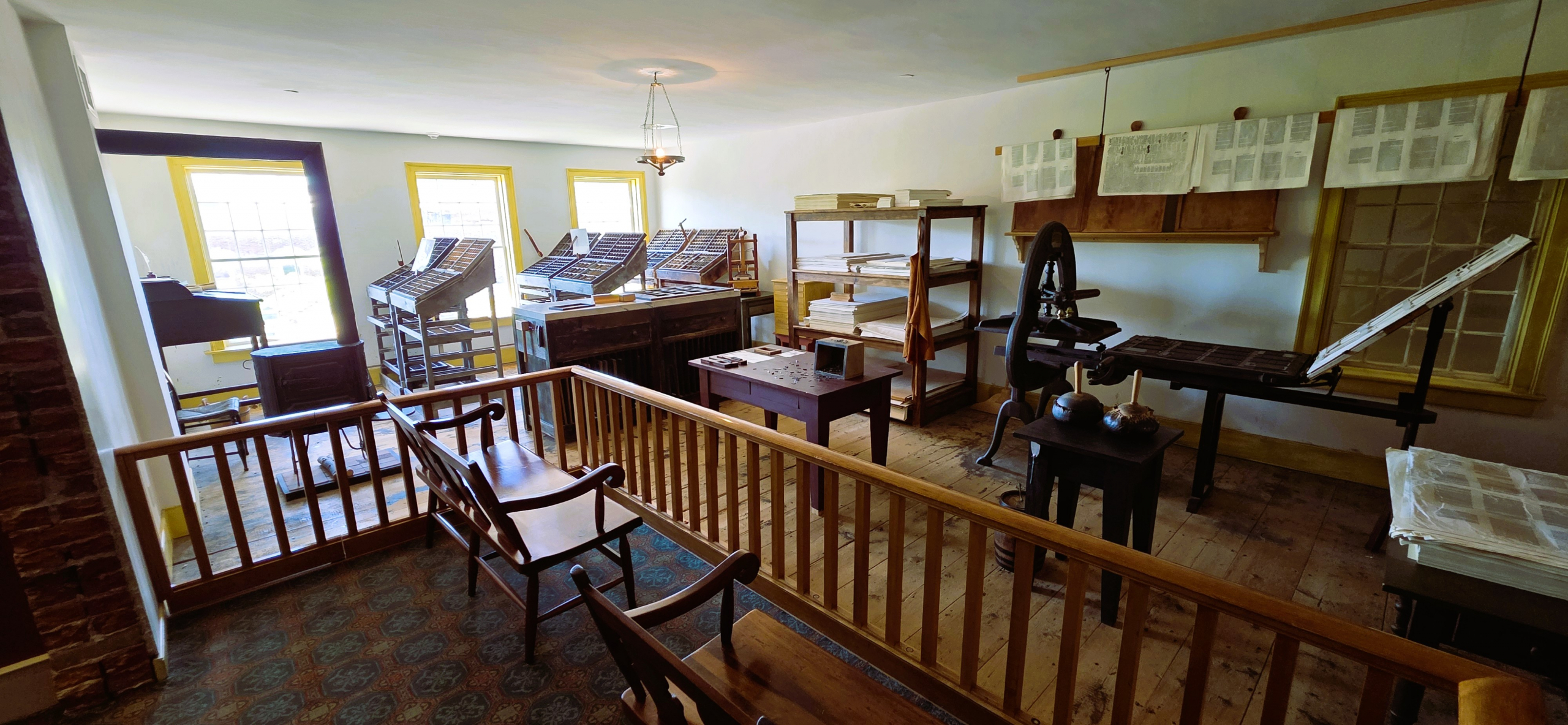
A couple of days ago, we visited the Grandin Press Building in Palmyra, New York – the place where the first 5,000 copies of the Book of Mormon were printed.
It was fascinating to be walked through the remarkably complex process of producing a book in 1830.
The typesetting began in August 1829. Each tiny metal letter had to be selected by hand and carefully placed in position. The pages were then printed, folded, gathered, stitched and bound in calf leather. By the time the work was completed, the printing press had produced almost three million pages.
The total cost was $3,000 – a considerable sum at the time (over $110K today), all made possible through the sacrifice of Martin Harris, who mortgaged part of his farm to help pay for the printing.
Seven months later, The Book of Mormon was finally published in March 1830.
As we stood in the building and looked around the print shop, it was easy to imagine the noise of the machinery, the smell of the ink and the painstaking effort involved in producing each individual volume.
We also had the opportunity to see an original first-edition copy of the Book of Mormon. A few of us asked how much it is worth, respectfully the sister missionary replied: β€œIt’s not about the price.”
Yet, impressive as that may be, the real value of the Book of Mormon has never been found in its age, its rarity or its price.
Its true worth is found in its pages.
I love reading, and I love books.
I have read the Book of Mormon many times and know of its true value. But during this Church history tour, as we have visited sacred places and reflected once again on the historical context and the many remarkable events that led to its publication, I have felt a renewed sense of awe and wonder.
The Book of Mormon did not simply appear.
Behind it were years of preparation, sacrifice, opposition, courage and faith. There were plates to be preserved, a record to be translated, witnesses to testify, funds to be raised and thousands of pages to be painstakingly printed.
And yet, somehow, it happened.

An Invitation

Today, millions of copies have been printed in languages across the world. But the invitation remains as personal as ever.
𝑷𝒍𝒆𝒂𝒔𝒆 – read it.
Open its pages. Study its teachings. Reflect on its witness of Jesus Christ. Pray sincerely and ask God whether it is true.
The Book of Mormon is more than an extraordinary historical artefact.
It is an invitation to come closer to the Saviour.
Perhaps the most important question is not how much an original copy may be worth today, but how much the words contained within it are worth to us.
β€œAnd when ye shall receive these things, I would exhort you that ye would ask God, the Eternal Father, in the name of Christ, if these things are not true.” – Moroni 10:4

Dressed for the Journey

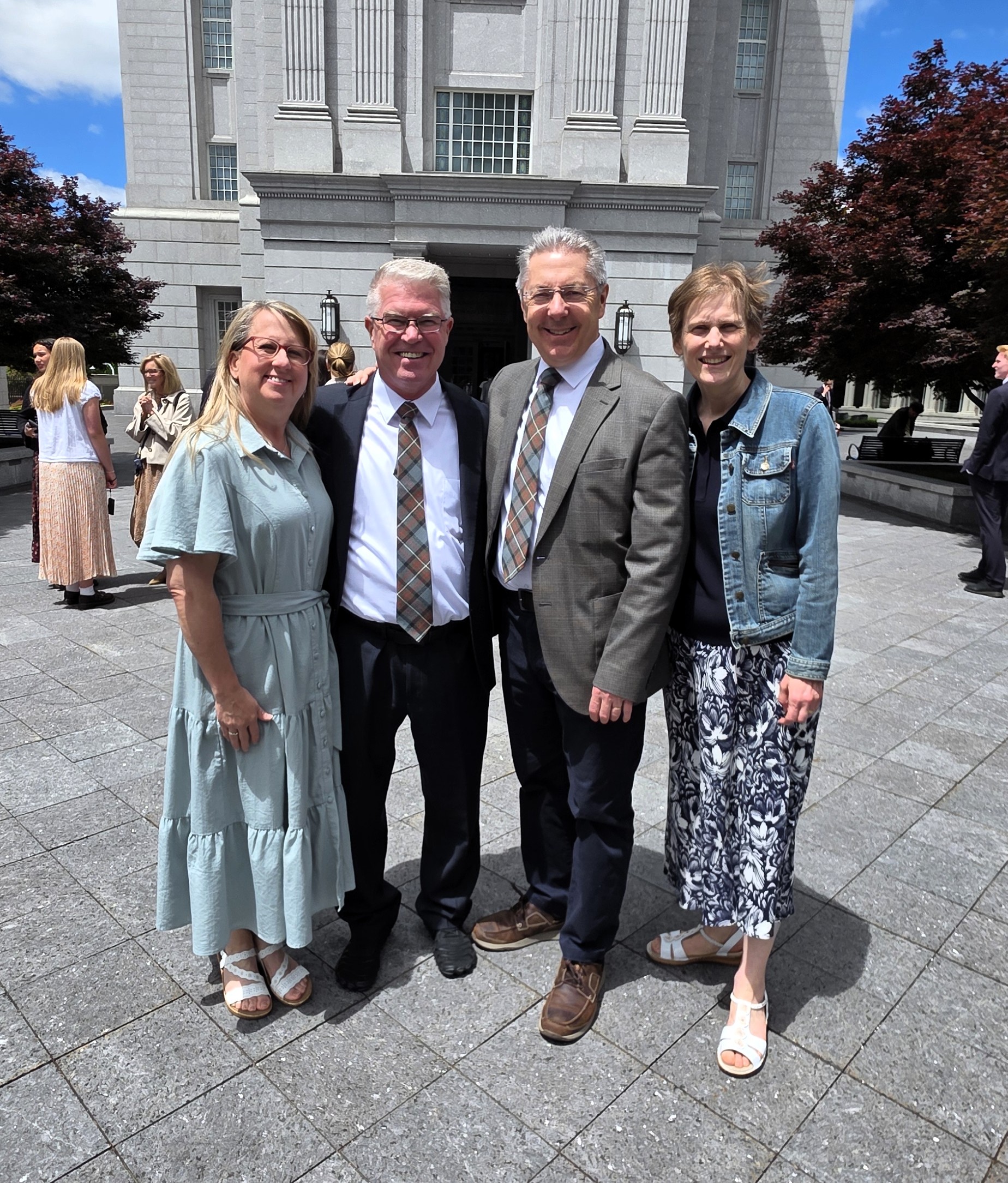
Yesterday morning, before setting off on our Church history tour, all of the leaders attended the Philadelphia Temple.
For a few moments, we were dressed in our Sunday best.
There was something rather special about beginning our journey at the temple – a quiet reminder of the sacred experiences, sacrifices and covenants that lie at the heart of the history we are here to explore.
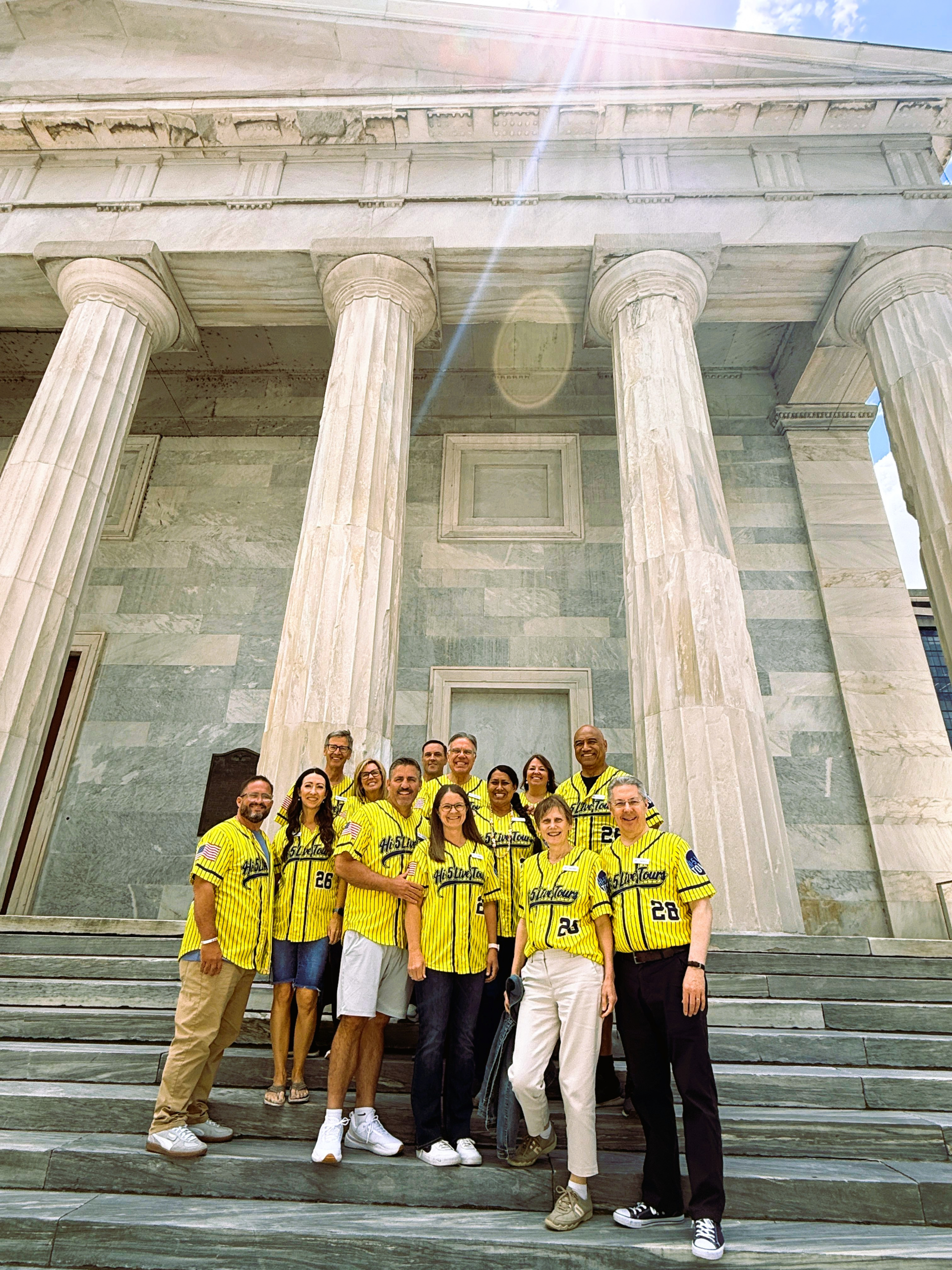
A little later, the jackets and ties were replaced by our rather bright tour jerseys. We certainly became much easier to spot in a crowd!
Yet perhaps there was a simple lesson in the change of clothing.
What we wear may change depending on the occasion. But who we are seeking to become should remain the same.
The Apostle Paul encouraged us to: β€œPut ye on the Lord Jesus Christ.”- Romans 13:14
As we travel together over the coming days with our 100 youth, visiting places where remarkable things happened, perhaps the most important question is not simply what we will see, but what we will feel and what we will choose to put on: greater faith, deeper gratitude and a renewed desire to follow the Saviour.
After all, the most meaningful journeys are not measured only in miles.
They are measured by the changes that take place within us.
Wherever your journey takes you, what kind of person are you seeking to become?

The View from the Top

It’s been 41 years since Marty and I served together as missionary companions in Cambridge, England, through April/May of 1985.
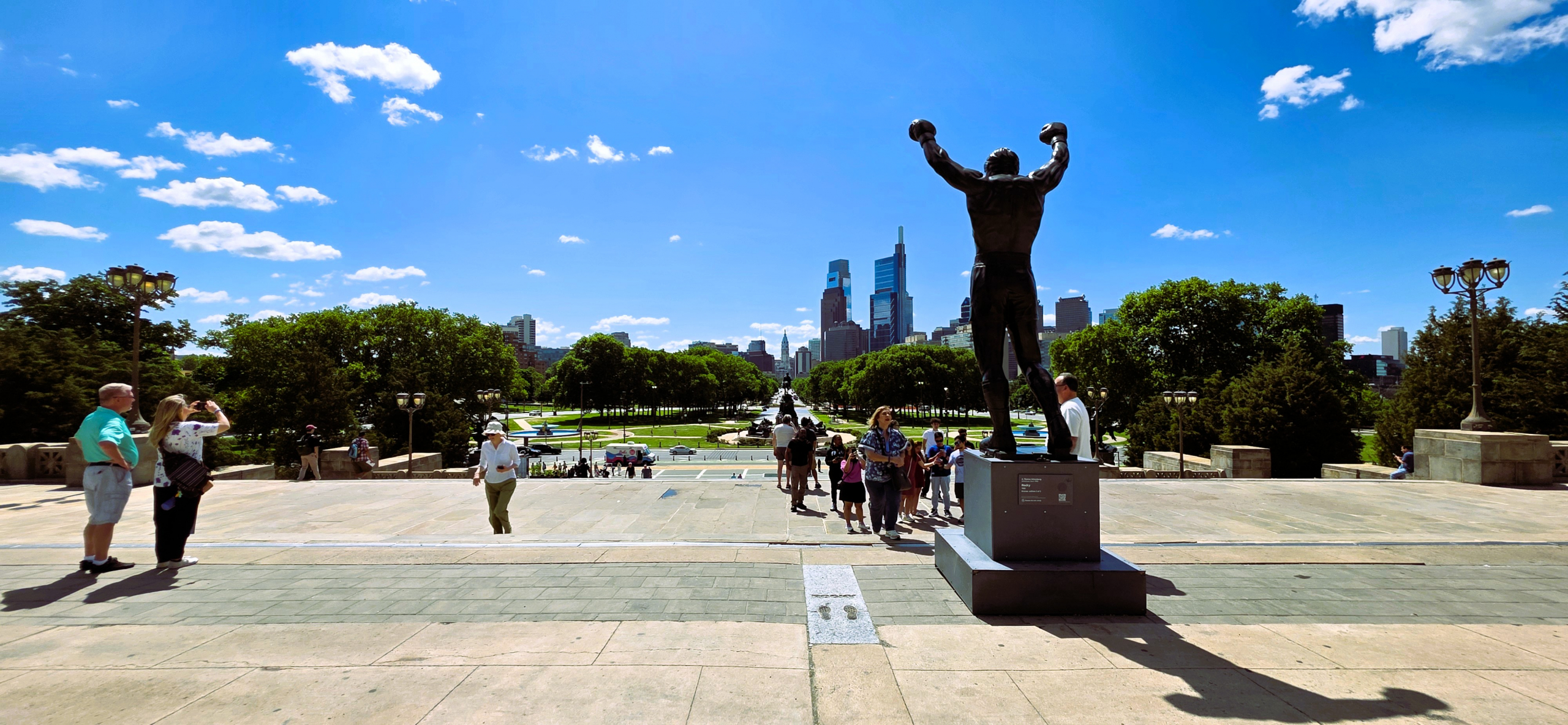
Yesterday, as part of our visit to Philadelphia, we stopped at one of the city’s most iconic landmarks, the Rocky statue outside the Museum of Art.
Like countless visitors before us, and just like Rocky some 50 years ago, I couldn’t resist running up the famous steps.
Standing at the top, looking out across the city skyline, I found myself reflecting on how different the view looks depending on where you stand in life.
One of the things I love about the Rocky story is that it was never really about boxing. It was about perseverance and refusing to quit. About becoming something more than you were before. In the movie, I remember Rocky raising his arms in triumph at the top of the stairs.
Yet, what we sometimes forget is that the view only came after the challenges and the climb.
As I stood there with Marty, my mind drifted back to those days in Cambridge. Two young missionaries with plenty of enthusiasm, very little experience, and absolutely no idea where life would eventually take us. Back then, almost everything lay ahead of us.
Careers, marriage, children, challenges, successes, disappointments, lessons – life!
Like many young people, we spent most of our time looking forward.
Now, four decades later, there is also value in looking back.
Later in the afternoon, we smiled and laughed as I shared some entries together from my missionary journal from all those years ago.
Looking back helps us see things we could never fully appreciate at the time.
The prayers that were answered, the disappointments that became blessings and our friendship that has flourished.
This morning, my thoughts are turning from looking back to looking forward once again.
In a few hours’ time, we begin a Church History Tour with around 100 young 16- to 19-year-olds. They may not even know much about Rocky, but perhaps that doesn’t matter.
Yet, they are at an exciting stage of life, standing at the bottom of their own staircase, with dreams to pursue, lessons to learn and experiences still to come.
They cannot yet see the view from the top.
What stories will they tell? What lessons will they learn? After all it is the climb that creates them.
Forty-one years ago, Marty and I stood in much the same place.
Looking back now, I am grateful we kept climbing.
Every generation has its own staircase to climb. What does yours look like today?

Liberty Still Rings

There was something rather symbolic about standing beside the Liberty Bell and reflecting on liberty at a time when America is preparing to celebrate 250 years since the signing of the Declaration of Independence.
Looking around yesterday, the building was full of visitors from all over the world, I even got to practice my Dutch with a couple of lads from the Netherlands. People patiently queued to catch a glimpse of a cracked bell that no longer rings.
Yet its message still echoes.
As a member of The Church of Jesus Christ of Latter-day Saints, it was difficult for me not to think of Captain Moroni and the Title of Liberty.
“And…. he rent his coat, and he took a piece thereof and wrote upon it – in memory of our God, our religion, and freedom, and our peace, our wives, and our children…. (and he called it the title of liberty)” – Alma 46:12-13
Moroni understood that liberty was not merely a political idea. It was something worth preserving, protecting and passing on. Freedom allowed people to worship, to choose, to build families and to live according to their deepest convictions.

Many Visitors

Many displays featured photographs of world leaders past and present and of statesmen visiting the Liberty Bell.
To me, it seemed that whenever someone becomes a significant voice in public life, they eventually find themselves standing beside this cracked bell for a photograph. Martin Luther King, Nelson Mandela, the Dalai Lama and many others have done exactly that.
I wondered if that is because liberty remains one of humanity’s most cherished ideals?
The bell may no longer ring, but its message continues to resonate far beyond the city of Philadelphia.
Standing beside the Liberty Bell, I found myself thinking that liberty is rarely maintained by grand gestures alone. More often it is preserved by ordinary people who value it enough to defend it, nurture it and use it wisely.
I also found it interesting that rather than a political statement, those who commissioned the bell, chose a scripture from Leviticus 25:10 to cast into the bell: “Proclaim liberty throughout all the land unto all the inhabitants thereof.”
Perhaps that is one reason people still visit. Deep down, most of us recognise that liberty is precious.
As we prepare to begin our church history tour, I wonder if there is an even deeper form of liberty worth considering. Through Jesus Christ, we can be liberated from fear, guilt, sin, resentment and the things that bind us spiritually. Political liberty matters greatly, but spiritual liberty matters eternally.
Yesterday, a cracked bell reminded me that some ideas are powerful enough to endure long after the sound has faded.
What liberties do you sometimes take for granted – and how are you using them to bless the lives of others?

The Sugar Snap Incident

Recently, we arrived in Philadelphia for a church history tour, full of excitement and ready for ten days in the States.
Then came the question at security and customs: β€œAre you carrying any fruit or vegetables?”
Monic answered first and mentioned the sugar snaps. The immigration officer gave us a rather quizzical look, and before the conversation got any further, we were being directed to a second check. Once there, I added my two apples to the list.
Apparently, sugar snaps and two apples are enough to begin an international incident.
Our passports were taken. We were told not to use our mobile phones. We were asked to sit and wait while our other luggage was collected.

Waiting…

At this point, our imaginations went into overdrive.
Would they open every suitcase?
Would they go through our belongings item by item?
Would they confiscate half our luggage?
Would they let us into the country at all?
Would we be remembered forever as β€œπ’•π’‰π’† π’”π’–π’ˆπ’‚π’“ 𝒔𝒏𝒂𝒑 𝒄𝒐𝒖𝒑𝒍𝒆”?
To make matters worse, Monic had actually wanted an apple on the plane, but they were in the overhead locker and we never quite got to them. Her plan had been to eat one once we landed.
Now, sitting in the waiting area, she began quietly debating whether she should just eat it there and then.
This felt risky. We had already been stopped for sugar snaps. Eating the evidence in a customs waiting area felt like the sort of thing that might not move things in our favour.
So, we sat there, trying to look calm, innocent and deeply law-abiding, while quietly catastrophising on the inside.
Eventually, after about half an hour, our luggage arrived. We were asked a few more questions.
The apples were taken away, probably to wherever forbidden apples go. Then, after checking some kind of database, the sugar snaps were declared safe.
We immediately wished we’d just eaten the apples on the plane.
All our luggage was scanned again and, at last, we were free to enter the USA.
The relief was real.
We had made it.
π‹πžπšππžπ«π¬π‘π’π© π‹πžπ¬π¬π¨π§: sometimes small things can create unexpected delays, especially when we are crossing into unfamiliar territory.
As leaders, it is easy to catastrophise when things don’t go to plan.
But often the best response is simple: stay honest, stay calm, answer the questions in front of you, and don’t let a temporary hold-up convince you that the whole journey is over.
Also, when in doubt, eat the apples before landing.
What helps you stay calm when a small issue suddenly feels much bigger than it is?
Β© Copyright 2024 Daryl Watson. All Rights Reserved. Registered in Scotland, Company Number SC473068