Tag Archive for: change

A different kind of tired

I’ve had a great, but exhausting week!

At the start of the new leadership programme – Lead the Way, with Aviva in Perth, there’s a familiar pattern emerging.

People arrive mid-afternoon, often after an early start and a long journey.

They mostly arrive with a little travel tiredness, having transitioned from back-to-back meetings into something unknown.

After all, they’ve just stepped away from the buzz of their day jobs, where decisions are constant and time is tight.

So, we slow them down.

It’s one of the quiet, yet very special gifts of this programme: two full days where they’re not doing the day job, rather, they’re encouraged to think differently.

Reflecting.

Paying attention to themselves and others in ways they usually don’t have time for.

A New Tired

And yet by the end of those two days, my discovery this week is they’re still tired, just in a completely other way.

It’s not the tiredness of logistics or deadlines.

It’s the stretch that comes from working with new models, testing fresh ideas, and forming new connections, not only in their minds, but with each other too.

It takes a great deal of effort to tune into those emotions, to have honest conversations, and explore their own leadership habits.

It’s also the kind of tired that comes from meaningful work.

And somewhere in all that effort, I have witnessed many who start to see a shift in mindset.

A quiet clarity.

The occasional Aha moment where something lands differently and opens up in a new way.

It’s not always comfortable, but it is purposeful. And for many, it’s long overdue.

So yes, they do leave tired.

But it’s a good tired, for each of them.

A stretched, thoughtful, worthwhile kind of tired.

And from what I’ve seen, it’s the kind that stays with you.

When was the last time you were stretched in a way that felt meaningful?
Savouring the Small Moments

Over the last couple of weeks, I’ve had the privilege of sitting in a large training room and simply watching learning unfold.
The leadership programmes I have been attending stretch over 2 days, beginning mid-afternoon on Day 1, flowing through a full Day 2, and closing at lunch on Day 3.
Yesterday, as the programme drew to a close, and we started to slow down, we stood together in a large circle for final reflections.
In our last 15 minutes, participants were invited to share their learning takeaways, the “a-ha” moments that had lifted, inspired, or even changed the way they think.
What struck me wasn’t the grand or dramatic revelations, but the 𝒔𝒎𝒂𝒍𝒍 𝒐𝒏𝒆𝒔.
A phrase that stuck.
A comment from a colleague.
A small moment of courage.
A shift in perspective.
A subtle insight that sparked a smile.
These were the things each delegate had chosen to hold onto and savour.
It reminded me of something important about leadership: so often we think learning has to come in big packages, huge breakthroughs, bold strategies, dramatic change.
But yesterday reminded me that it’s the little things that often make the biggest difference.
It has been my life experience that great leaders pay attention to the 𝒍𝒊𝒕𝒕𝒍𝒆 𝒕𝒉𝒊𝒏𝒈𝒔 and encourage others to do the same.
Over the next few days, why not watch out for those small learning moments that deserve a little more savouring.
The subtle experiences you might otherwise overlook.
The quiet insights that whisper rather than shout.
Notice them. Capture them. Reflect on them.
Because sometimes, the smallest takeaway carries the deepest learning and the greatest power to shape lasting change.
What small moment this week has taught you the biggest lesson?

Lighten the Load

Last Saturday, I climbed Arthur’s Seat in Edinburgh for the third time this year – this time, with my good friend Kai.
We’d originally planned to tackle Ben Nevis, but time and fitness made us rethink, so Arthur’s Seat it was.
We travelled over to Edinburgh on the bus, catching up on our latest news.
As we walked along Princes Street and down the Royal Mile, the summit in the distance felt manageable, familiar even.
Kai had brought a heavy bag with him, and I asked, half-joking, “Are you planning to carry that all the way to the top?”
He considered my question, then, sensibly agreed to stash it in the gorse for a couple of hours.
No point in hauling all the extra weight up a hill if you don’t need to.
That small moment stuck with me.

The Life Lesson

When you’re climbing, literally or metaphorically, what are you carrying that you don’t need to?
As leaders, coaches, or just people trying to move forward, we all take on things that slow us down.
Extra responsibilities, assumptions, doubts. Life has taught me that sometimes we need someone beside us to ask the obvious question: Do you really need to carry that right now?
Our route changed early on too.
Recent gorse fires had closed the path I’d taken on previously and rockfalls had made it unsafe.
In the moment, we adapted and took another way up.
It was unfamiliar, but just as scenic, pausing a couple of times when the incline got a bit steeper.
Reaching the top, it was packed with tourists soaking up another glorious blue-sky day!
Coming down was much easier. We picked up Kai’s bag and found a good spot for lunch.
We travelled home on separate buses as Kai had some things to do in Edinburgh, but I found out later, that like me, he’d fallen asleep on the bus within minutes – exhausted!
Sometimes the best coaching happens in walking shoes, halfway up a hill, with the sun on your back and a friend beside you.
The walk reminded me of a few leadership truths:
• Plans change, be ready to adapt and adopt an agile mindset.
• You don’t have to carry everything all the time.
• And sometimes, the best support you can offer is a quiet nudge that says, “You can let that go.”
What load are you carrying that’s no longer serving you?

A 400-year leap

One of my favourite ways to start a learning session is with an icebreaker I call “A conversation with a Time Traveller.”
Two people pair up: one plays someone from the early 1600s, the other plays a modern-day person, it’s like having a conversation with one of your ancestors.
The 2025 partner’s job is to choose something the 1600s person wouldn’t recognise.
Something like a smartphone, Netflix, or a drive-thru, and then try to explain it in a way they can grasp.
The fun comes from realising how hard it is to describe something so normal to us, yet so weird to them.
It’s a reminder that things and our understanding of them, can change dramatically over time.
The same is true with the gospel of Jesus Christ.
The scriptures often speak to people in the language and symbols of their day.
For instance, a shepherd, a fisherman, a farmer in ancient times would hear parables, yet only to those spiritually ready, were revealed the mysteries of the kingdom of heaven.
Concerning the parables of Jesus, Howard W. Hunter said: “They are so simple a child can understand, yet profound enough for the sage and philosopher.”

Our Understanding Today

That was true for someone living in the 1600s, and in our digital world of today.
Those same teachings sometimes require a new frame of reference for us to truly understand.
Jesus promised that the Spirit would “guide you into all truth” (John 16:13).
I know that God meets us where we are and teaches us in ways we can truly understand.
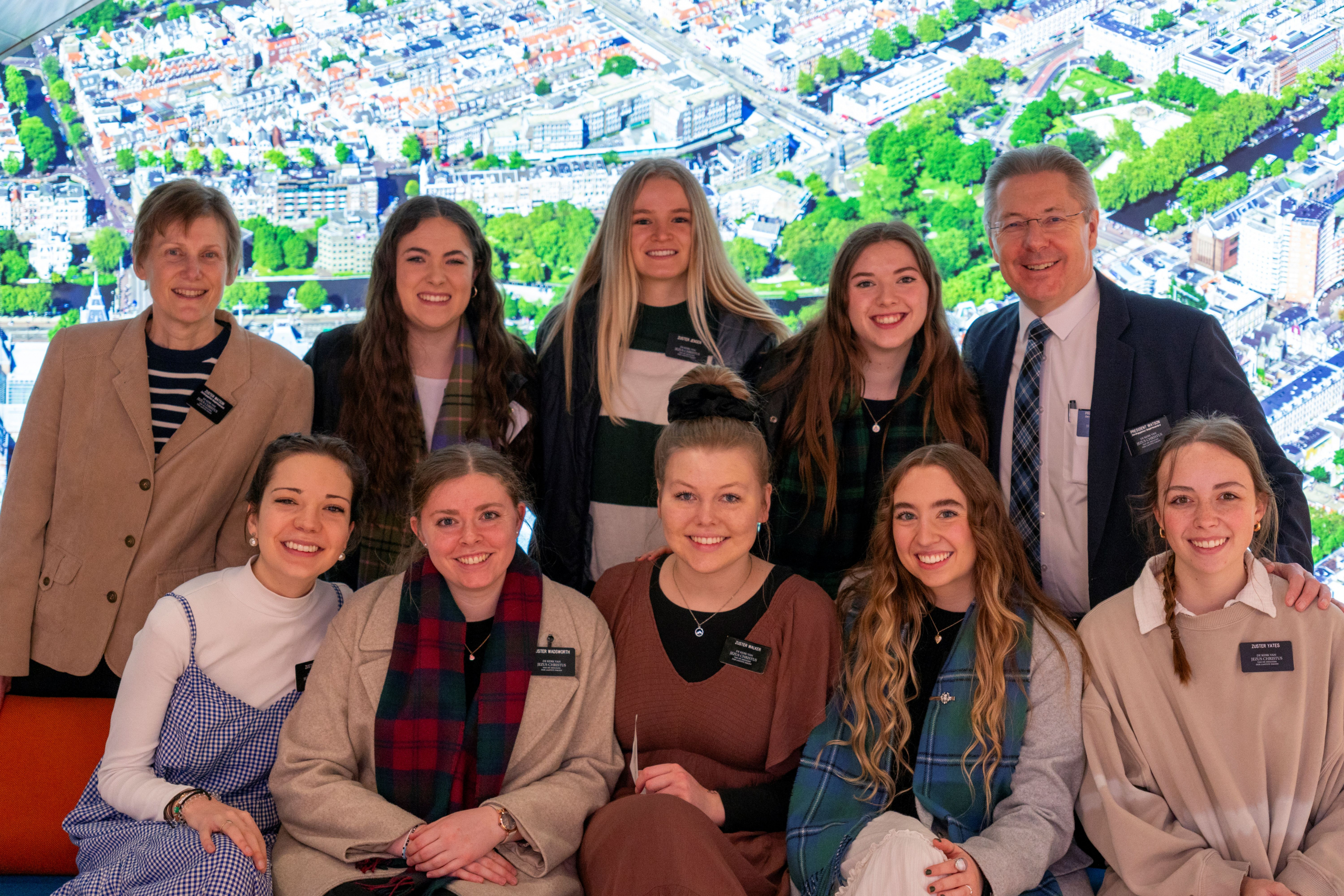
In our time in Belgium and the Netherlands, I saw many young missionaries learn to speak to people from different cultures and in many different languages, as they slowed down to understand.
In the same way, we can learn to share the gospel in ways that make sense to others, no matter how different their “world” may be from ours.
It starts by listening first, seeing through their eyes, hearing with their ears, and understanding their questions, as if we were in their shoes, before we even speak.
Just like in the icebreaker, it takes patience, creativity, and a willingness to see through someone else’s perspective.
The gospel never changes, but the way we understand and share it must speak the language of the listener – whether they come from the 1600s, the 21st century, or anywhere in between.
How might you prepare today to better connect with the “time travellers” you meet tomorrow?

The Crazy Zone

Coming home from a mission can be a disorienting time – that’s because you’re certainly not the same person who left.
Words like weird, unsettled, strange, challenging, and hard come up in nearly every conversation I have with returned missionaries.
And after 200+ coaching conversations in recent months, I can say one thing for sure, you’re just in the neutral zone.
In my experiences, there is nothing so unchanging, so inevitable as change itself.
Yet, we can confuse change with transition. Change is external – it’s coming home, starting school, getting a job, seeing family and friends. Transition is internal. It’s what your mind and heart go through as you adjust to the new reality.
One of the best frameworks I use in coaching is William Bridges’ Transition Model, which breaks transition into three stages:
1. 𝐄𝐧𝐝𝐢𝐧𝐠 – Letting go of what was.
2. 𝐍𝐞𝐮𝐭𝐫𝐚𝐥 𝐙𝐨𝐧𝐞 – The in-between, uncertain, disoriented time.
3. 𝐍𝐞𝐰 𝐁𝐞𝐠𝐢𝐧𝐧𝐢𝐧𝐠 – When the new identity and rhythm take shape.
In many recent conversations, I’ve found a few returned missionaries stuck in the neutral zone, oftentimes called the crazy zone.
You don’t feel fully part of your mission anymore, but you’re not fully settled back into life at home either.
Remember, “It must needs be, that there is an opposition in all things.” – 2 Nephi 2:11
It’s a strange in-between space where routines are missing, identity feels unclear, and emotions can be all over the place.
At times, this zone can apply to each of us, and it isn’t failure, rather it’s new growth!
This is the real path of transformation and sometimes it will feel up hill, slow, or like you’re even going backward.
Life can be like a series of hills and valleys, and yet I know that the best growth often comes in the valleys.
It’s important to hold on to your anchor habits that grounded you during your mission:
• 𝐏𝐫𝐚𝐲𝐞𝐫 – You still have your direct line to the Lord, so use it.
• 𝐒𝐜𝐫𝐢𝐩𝐭𝐮𝐫𝐞 𝐬𝐭𝐮𝐝𝐲 – Insights will often come in small, daily doses.
• 𝐒𝐞𝐫𝐯𝐢𝐜𝐞 – Shifting focus from yourself to others will help
• 𝐆𝐨𝐚𝐥 𝐬𝐞𝐭𝐭𝐢𝐧𝐠 – You can still set inspired goals.
You don’t need to live your daily mission schedule – but you can continue your routines.
Yes, there is pain in the transition period, but it will not last forever – patience, love, and long-suffering are needed.
What small habit is helping you stay anchored right now?

Roadshow Surprise

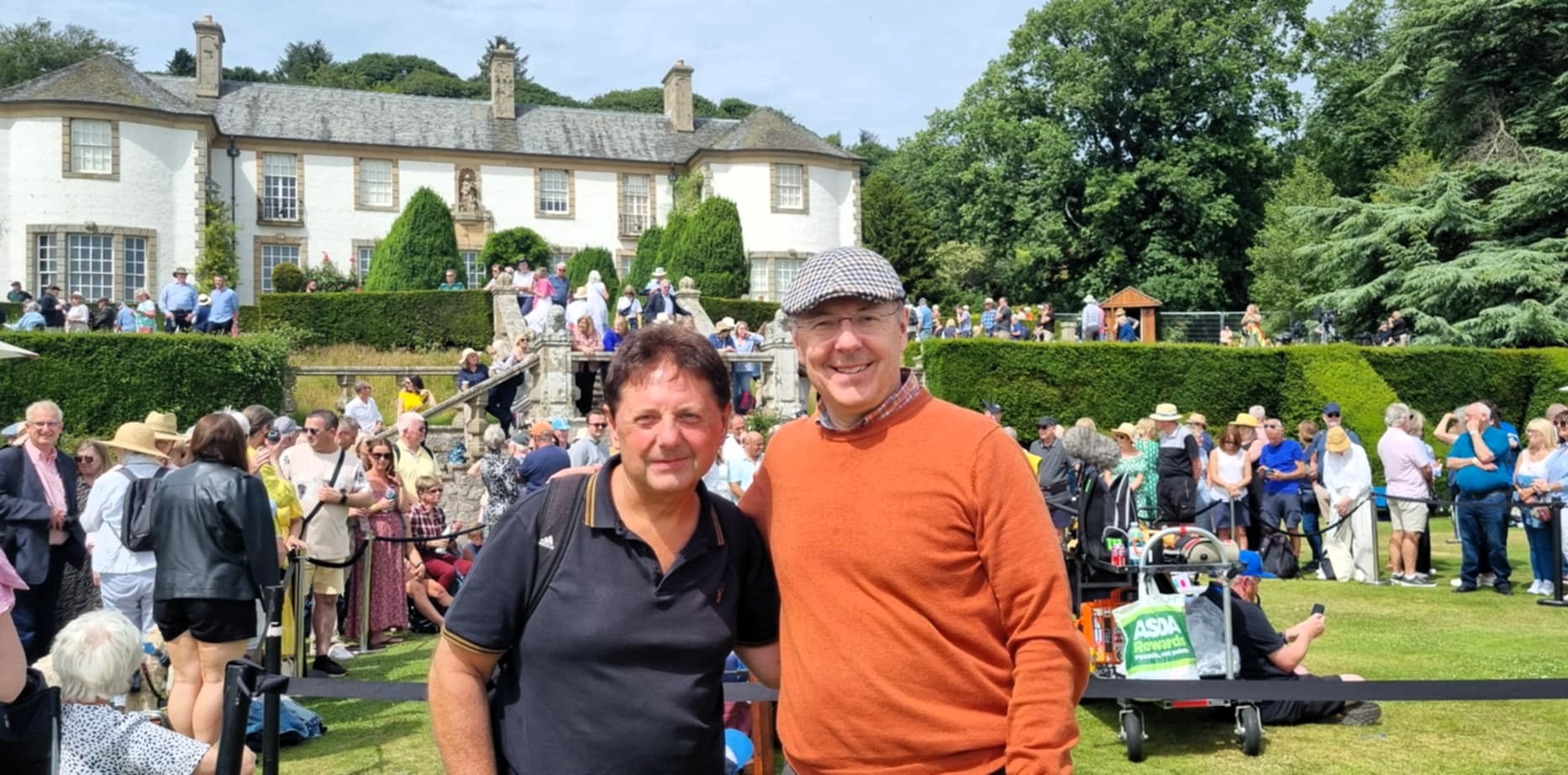
My brother and I had a great day recently at the BBC Antiques Roadshow at the Hill of Tarvit Mansion & Garden in Fife.
It was beautiful sunny day, a great location and there was a wee bit of telly magic in the air.
Paul had brought along a few items to be valued, and after checking-in, we were off queuing with our two tickets – one for jewellery, one for miscellaneous.
The line for jewellery was already fairly long, but everyone was happy, and we had some lovely chats with folk while we waited.
Then the fun started.

Everything Changed

We got to Siobhan (one of the experts), and Paul started sharing some items.
A few estimates were given, all very nice… then he pulled out something else and her face lit up.
She just said, “I think we need to get these filmed,” we looked at each other with big smiles!
“Do not doubt, just believe” – we thought.
From there, it was like entering a different world.
We were moved into another waiting area (and then another!), then finally (after a fair bit of waiting) – filming time.
Paul was great.
When the final valuation came through, I nearly had to pick him up off the grass.
Let’s just say… it was worth the wait! 😊
We never did make it to the miscellaneous line; our time had run out!

Effortless

We were both impressed how well the whole event was run and organised.
Yes, we had a bit of waiting to do, but smooth check-ins, clear signage, friendly staff, and when something unusual cropped up, the process adapted – fast, all made for a hugely enjoyable day out.
I noticed too there was no fuss and no drama throughout the day, just a well-oiled team who knew their roles and trusted each other to get on with it.
That’s how good events feel effortless.
So, whether you’re managing antiques roadshow or running a business, there’s something to be said for:
• Having a clear plan.
• Empowering your team to be in the moment.
• And always being ready to shift gears like Siobhan when something kind of special turns up.
Paul and I had a great day out and fingers crossed we make the cut when it airs!
How agile are you or your team to pivot, when opportunity shows up?

From Rome, with Hope


Yesterday, I had the privilege of attending the Shape the World Summit in the shadows of the Vatican, at the Pontifical Urbaniana University in Rome, a place fondly referred to – as Cardinal Luis Antonio Tagle reminded us – as “the missionary university.”
And it was HOT!! 35C!
It was a gathering rooted in the Jubilee of Hope, where more than just ideas were exchanged. We heard of leaders shaped not by power or platform, but by kindness, goodness, and humility.
Cardinal Tagle drew a moving contrast between Christian hope – anchored in divine purpose – and the kind of wishful thinking that so often falls short.
The theme of faith over fear became a recurring call throughout the day.
The summit didn’t shy away from the complex realities of our world: deepening conflict, climate disruption, the acceleration of AI, and demographic shifts across ageing western societies.
One sobering statistic lingered long in my mind: over 800 million people go to bed hungry each night.
Amid such weighty truths, a quote from Baden Powell, founder of the Scouts, brought clarity and resolve, especially meaningful to me as a former Boy Scout myself…
“Try and leave this world a little better than you found it.”

Too small?

And just when the scale of the challenges felt overwhelming, Oliver Pawle shared an African proverb that really resonated with me:
“If you think you’re too small to make a difference, you haven’t spent a night with a mosquito.”
A wise and timely reminder to us all.
For me, one of the most stirring contributions came from James Moore, whose talk “A Broken World Needs Creative Leadership” struck a powerful chord. He spoke of the USA at a geopolitical crossroads, but also of a broader truth – that we are all, in his words, “temporary shepherds of our global world.”
A powerful reminder of our shared stewardship of the earth and each other.
Much was also said about the appointment of the new Pope, significant not only in the choice of leader, but in the values that come with his Augustinian roots: humility, unity, contemplation, and deep interior commitment.
These are virtues our fractured world urgently needs.

The Common Growth Fund

As a Trustee of the Freedom of Religion or Belief (FoRB) Foundation, I was honoured to stand alongside my fellow trustee Matthew Jones for the launch of the Common Growth Fund, in partnership with Lawrence Chong of Consulus. This initiative seeks to reimagine our economic systems, supporting faith-based enterprises and creating space for values-led, socially impactful transformation.
Again and again, familiar themes emerged:
• Respect and dialogue as essential tools for peace
• Compassion and empathy as the birthplace of change
• A growing hunger for creative, values-based servant leadership across all sectors of society.
But perhaps what moved me most wasn’t any single keynote or statistic. It was the spirit of the gathering.
People from diverse backgrounds and many faith traditions, all united in a shared desire to build something better, to shape the world with courage and conscience.
And yes, I came away with a few new friends, too.
So, what kind of world are you trying to shape, and who are you shaping it for?

The Real Way

For months now, sixteen of us have been preparing for our great West Highland Way adventure beginning this week.
Among our most enthusiastic walkers?
Always full of energy, laughter never far behind, and the kind of person who makes even rainy training hikes feel like a party.
But last weekend, a message from Emily landed like a thud.
She’d been out hiking, went over on her ankle, and managed to break her little toe.
That tiny bone had big consequences.
No walking the West Highland Way.
Not even a few stages.
Her dream of trekking through the Highlands, gone in one misstep.
So then came the question: should she even come?
Now, if you know Emily, you’ll guess her answer wasn’t made lightly.
It came after prayer, reflection, and a few conversations with family and friends.
And in true Emily fashion, she showed up.
Not with boots, but with crutches and a wheelchair rented after landing in London.
That kind of determination is something that typifies Emily!
Yesterday, we wandered (and wheeled) through Edinburgh, up and down the Royal Mile.

Together

Friends took turns pushing, guiding, and laughing along the way.
No complaints.
Just togetherness.
And it hit me; this is what walking the Way really looks like.
“For if they fall, the one will lift up his fellow; but woe to him that is alone when he falleth; for he hath not another to help him up.” – Ecclesiastes 4:10
Emily won’t be hiking the trail, instead she’ll be in the support van, encouraging us all on, and reminding us that the journey isn’t just about who finishes the miles on foot, but about how we can carry one another through it.
Because that’s the real Way, isn’t it?
Supporting one another even when the road ahead looks different than you hoped.
Who may need a lift from you this week, a push up the hill or a word of encouragement?
Happy Sunday from Scotland ❤️

26D and Me

Yesterday was a long one.
I left home at 5:00 a.m. and returned at 12:30 a.m.
A full on 19.5-hour day.
In between was a drive to and from the airport, two flights, the London underground, two train rides, a few Zoom calls squeezed in at stations and cafés, some meetings, and plenty of walking across a hot and bustling London.
Through all that travel, one small detail stood out: 𝐬𝐞𝐚𝐭 𝟐𝟔𝐃.
I didn’t book it, I didn’t choose it, but it chose me twice.
The day began with a British Airways flight from Edinburgh to London City Airport.
After an early morning delay of over an hour, due to a faulty megaphone, we boarded, and I found my place in seat 26D.
My mind was on the day ahead, with travel, meetings to navigate, decisions to make, and several planned conversations that really mattered.
The flight was short, but in that little space I rehearsed, prepared, prayed and planned.
The morning version of me was purposeful and hopeful.
The flight down was a chilly one, but London greeted me with warm air and fast footsteps.
It was hot down there!
From Docklands to Liverpool Street, I criss-crossed the city on the DLR and tube.
Through the day were some great face-to-face meetings and Zoom calls too.
It was one of those days where there was a lot going on and I just kept moving forward.
By late afternoon, I was done in.
I made my way to Stansted, weary but grateful.
Boarding the delayed EasyJet flight home, I glanced at my boarding pass, seat 26D again.
Two different airlines. Two different airports. Same seat.
That’s a 1 in 23,040 chance of being randomly assigned seat 26D on both flights!
I may have been in the same numbered space, but I wasn’t the same person.
The morning me, 26D carried a version brimming with intent.
The evening me, 26D carried a quieter, sleepier version.
Tired, yes, but thoughtful, happy and reflective.
The same seat, but a different state of mind.
26D was the same number, but I had changed.
I’m sure we all have days like that full-on, demanding, stretching.
What in your life looks the same on the outside, but feels completely different on the inside?

More than Miles

These last few months I’ve done a lot of walking.
I walk everywhere.
This week, I also discovered that May is National Walking Month 🥾🥾
For many, it’s a chance to stretch their legs and get outside.
But for me, my daily walks are helping me train for my adventure starting 28th May, along the West Highland Way with 15 dear friends in support of Mary’s Meals.
Years of scripture study have taught me lots about the life and teachings of Jesus Christ.
Many things stand out in His teachings, but I’d like to focus on just one thing today.
He walked everywhere.
As I walk, I’ve been thinking about how much of the Gospel is rooted in the act of walking.
He was often seen walking by the Sea of Galilee, on the road to Emmaus, through crowds of people, with sinners, publicans, to Nazareth, Capernaum and Jerusalem, but mostly He walked with His disciples, and He even walked on water.
The disciples walked everywhere too.
Often not knowing exactly where they were going, but they trusted deeply and followed Him.
That’s what faith often feels like.
Some days I’ll put my boots on, uncertain what path I’ll take, but I hope and believe it always leads somewhere worth going.
We don’t need to walk by the shores of Galilee or among the Judean hills to walk where Jesus walked.
As Thomas S. Monson said, “Walking where Jesus walked 𝒊𝒔 less important than walking 𝒂𝒔 Jesus walked”.
It’s not about the path under your feet, rather it’s all about what’s in your heart, by choosing to follow Him in your own journey through life.
The scriptures teach us not just about what to do, but how to walk; “To act justly and to love mercy and to walk humbly with your God.” (Micah 6:8)
That’s the kind of walk I want to train for.
Not just the miles ahead, but a life filled with service that moves toward justice, mercy, and humility.
I so look forward to walking together with my friends in a few weeks’ time.
Walking is simple.
But walking with purpose, that’s really where the Gospel meets the ground.
Where is your walk leading you, and who are you walking it for?