A few years ago, I sat listening to Brad Agle, co-author of “The Business Ethics Field Guide” on a 2 day programme of workshops in London. Frequently I recall the lesson of those 2 days.
In his keynote address, Brad asked the audience “what does dissemble mean?” Like many others in the room, I kind of thought I knew what it meant, but wasn’t exactly certain. There were a number of suggestions from the audience, before a few definitions were given that went something like this:
- to give a false or misleading appearance to; conceal the truth or real nature of:
- to put on the appearance of; feign
- to conceal one’s true motives, thoughts, etc., by some pretense; speak or act hypocritically
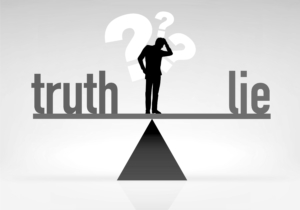 In that moment, for me then, it simply meant to conceal the truth or to deceive. Brad then shared some stories to bring further meaning to the point he was making which was simply this….“Never dissemble”.
So, have you ever been party to a dissemblance? Have you ever thought that misrepresenting or concealing the truth could create a better outcome? Is it your natural tendency to push the limits of honesty to the very edge?
I have shared this story before, but it illustrates the point I want to make today.
A childhood story
Growing up in Scotland in the late 1960’s had its ups and downs. As a wee laddie, my mum would often have me run around to the shops to get a loaf of bread (plain – with thick ends), or some square sausage for the dinner. There weren’t any big supermarkets in those days!. I recall, one day however coming back home and eating a toffee dainty. Mum asked, “what are you eating”. I responded, “oh, its just a dainty!”. Little did I know the impact of that question.
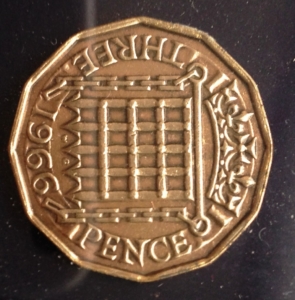 Mum had given me a thruppence (three old pence), the exact money in those days for a loaf of bread. I came home eating a toffee dainty! How could that be?! No sooner had I admitted what had happened, when she promptly marched me back around to the corner shop to confess my guilt to the shop keeper, for stealing the toffee dainty! I hadn’t overtly lied per say, but indeed it was a childhood lesson on dissemblance that has stuck with me for nearly 50 years.
To quote from the “Business Ethics Field Guide”… “often people dissemble just by keeping their motives to themselves – usually to look better or protect their interests. In fact, the Dissemblance dilemma occurs whenever misrepresenting or concealing the truth could create a better outcome. p128”
Niccolo Machiavelli in “The Prince” encouraged clever lies, tricks, cunning, duplicitous, controlling and manipulative behaviour in order to get things done accordingly to his will. Sadly in my professional career, I have been witness to behaviour of that type, which ultimately ends in failure, disappointment and pain. We often see this type of behaviour on the global stage too.
Challenges of today
So what moral and ethical dilemmas are you facing today, at home, at work or in your social circles? Do you frequently dissemble? Are you even aware that you are doing it?
I believe that all human beings are innately honest. In the business world of today, we have seen too many examples of personal ethics and values being overridden by professional standards. I believe the value of honesty to be one of a number of ethical pillars that we must all resolve to live by, in every aspect of our personal, family and professional lives……. every single day. It can make a change to everything and to everyone.
As a professional coach, I have found over the last few years, that those of us who work in this profession, have an uncanny knack of being able to help.
My invitation today, to you, is to stop, reflect on what is happening all around you, consider what matters most – and then choose to do the right thing. The honest and truthful thing. It will, I promise pay many dividends over the long term. And incidentally, if you are looking for a good coach to help you on your journey, I’d be happy to help you along the way.

 As a coach, when a series of coaching conversations come to their ultimate conclusion, I frequently receive a note of thanks, sometimes even a little gift and occasionally both. I do not seek after them, these things simply arrive in the post. The thank you notes are always filled with beautiful heartfelt words of gratitude. Each card is carefully written and filled with expressions of appreciation and kindness for the time I’ve given to an individual to help them along in their personal journey. The result, usually a warm fuzzy!
 After a long pause, I recall that he set to work immediately and pulled out a big box of tools. The box was a little higgledy piggledy, and as I learned throughout his life – that that was my dad! No matter, one small spanner was used to tighten the wobbly seat. Another set of tools were used to remove the wheel, repair the puncture and blow up the tyre again and tighten it into position. Dad then got out a set of pliers to fix the brakes. Finally, another wrench was used to straighten the handlebars. All in all, using a variety of tools, after a short time, the bicycle was fixed and off I went on my ride with a gleeful smile. “Dads are great” I thought!


