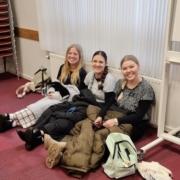

Sitting alongside
In a recent learning programme, a participant asked a question that had left her momentarily confused.
Rather than answer from the front of the room, I paused, pulled up a chair, and sat alongside her.
It was a small movement, but it changed everything.
Her face was quite the picture for a second, a clear reminder that pulling up a chair isn’t standard facilitator behaviour!
What followed wasn’t an explanation, but a coaching conversation in real time.
I was curious, empathetic and unhurried.
Listening not to reply, but to understand.
To have empathy is to be able to feel another person’s feelings.
So often, conversations can become a dialogue of the deaf, where people speak past one another, each rehearsing their response in order to reply, rather than receiving the other and seeking to understand.
Empathy interrupts that pattern.
It slows us down.
It lowers our status.
It creates safety.
I know that leadership doesn’t always mean having the answer.
Sometimes it means changing the dynamics of the moment, by stepping out of a role, sitting alongside, and being genuinely curious about where someone is thinking from.
In turn, helping others find their own answers.
When people feel understood, thinking expands.
And when thinking expands, learning follows.
That, quietly, is leading the way.
Who might benefit today from you simply sitting alongside them?