Duct Tape Leadership
There are moments in life when you begin to realise just how important your particular seat on an aeroplane has become.
A couple of days ago, on our Delta flight home from Atlanta, Georgia, that seat happened to be mine, 48E. Or, more precisely, the overhead bin directly above it.
The plane was full. Everyone was seated and the flight was due to depart at 10.50pm. It was now 11.20 pm local time. Most of us were tired, increasingly hungry, and rather keen to begin the journey home.
There was only one small problem.
The overhead bin above my seat would not close. 
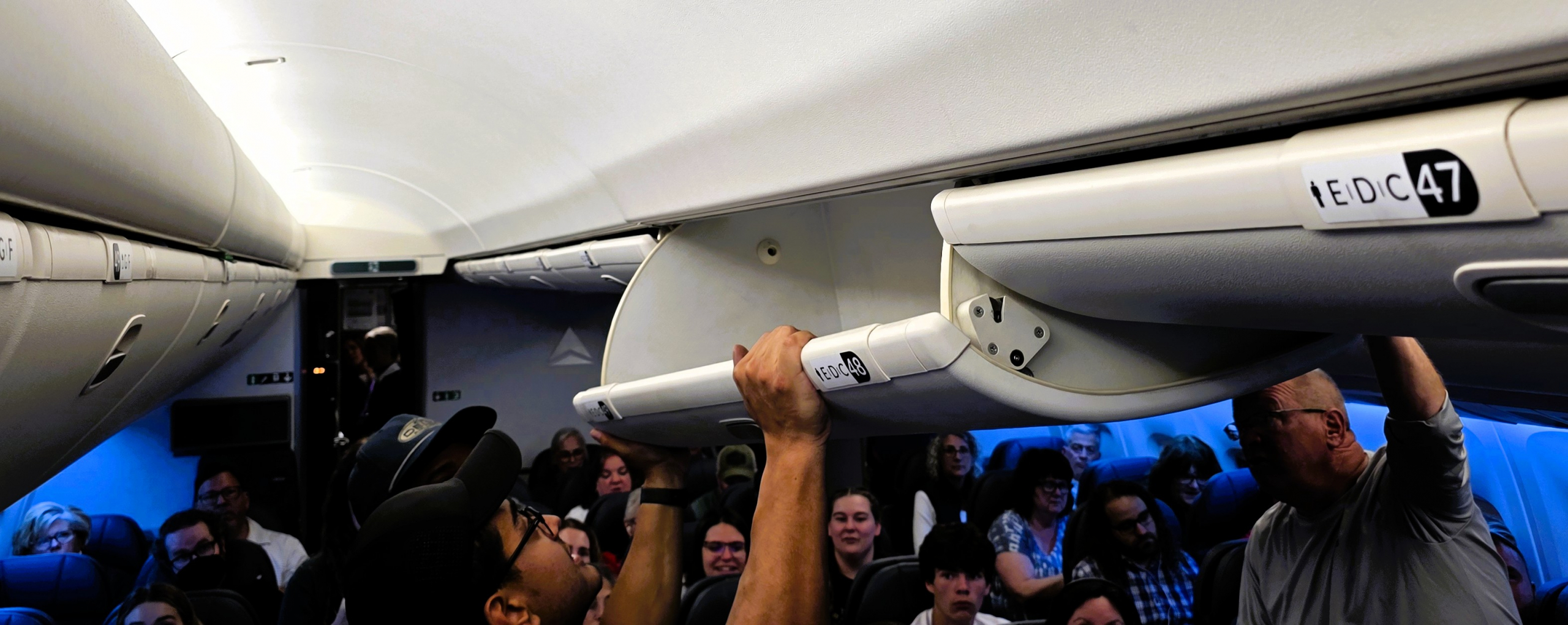
At first, one member of staff appeared. Then another. Then another. And then another.
Before long, four mechanics were gathered in the aisle, carefully examining the offending compartment.
There were tools, torches, discussions, puzzled expressions and several increasingly determined attempts to persuade it to cooperate.
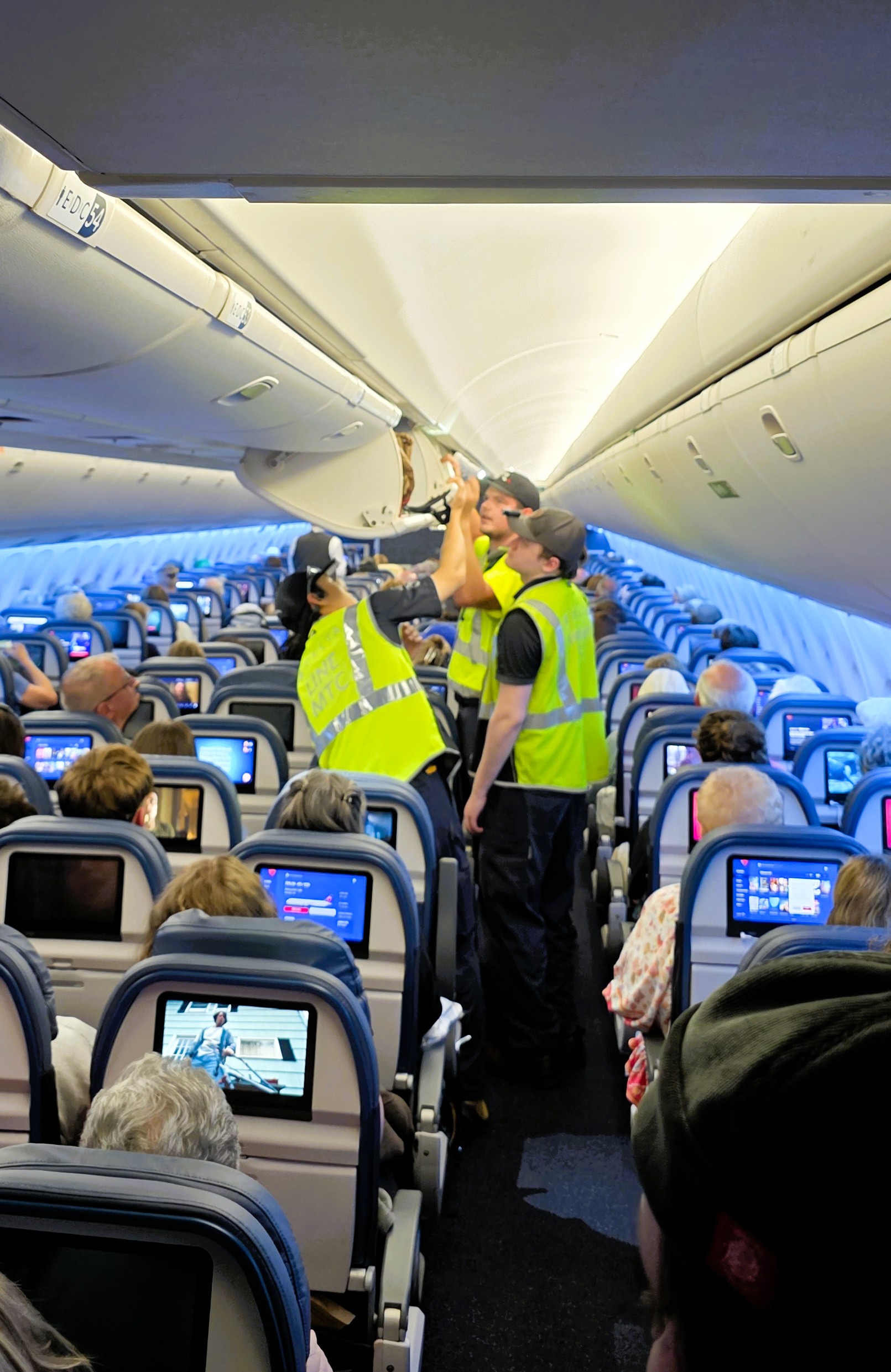
The passengers around me became quite invested in the outcome.
It felt a little like watching a particularly tense episode of The Repair Shop, except we were all trapped inside the workshop, with little progress being made.
Of course, safety matters. I was genuinely grateful that the crew took the problem seriously.
However, there was still something quite amusing about the situation.
A large aircraft. Sophisticated technology. Highly trained pilots. Hundreds of passengers. The ability to fly thousands of miles across an ocean.
And the one thing standing between us and Scotland was a cupboard door above seat 48E.
After more than an hour, several tools and a fair amount of brute force, the breakthrough finally came.
The magic solution?… Tape. Lots of tape.
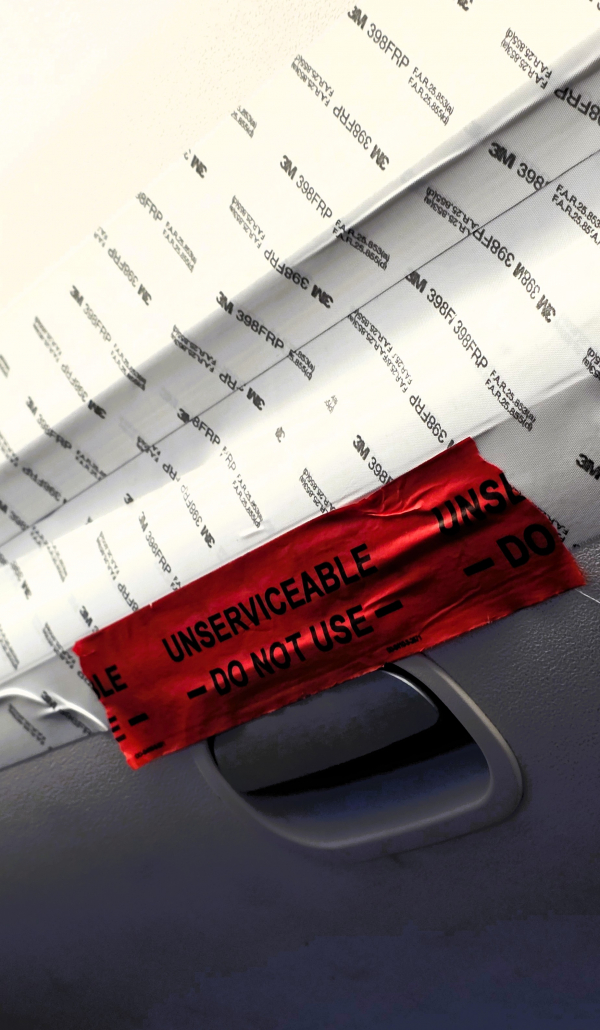
The bin was sealed shut, labelled “UNSERVICEABLE – DO NOT USE”, and quietly retired from active duty for the flight.
It turns out the answer to the question, “How many mechanics does it take to close an overhead bin?” is: Four mechanics, one hour, a couple of metres of tape – and a formal retirement notice for a cupboard door.
There was a wee leadership lesson in it too.
Not every problem needs an elegant solution straight away.
Sometimes good leadership is about making things safe, keeping people moving and fixing it properly later.
What are you overcomplicating that may simply need a practical next step?