A Pilgrimage of Faith
Several times over these last few days, my attention has been drawn to the year 1620, the Pilgrim Fathers, the Mayflower, religious freedom, and liberty.
Looking back has helped me look forward.
A pilgrim is “a person who journeys to a sacred place for religious reasons.”
In Latin, it comes from the word peregrinus, meaning “one who has come from afar.”
Pilgrimages have long been a common feature of many world religions, including Christianity, Judaism, Islam, Buddhism, Hinduism, and Shinto. Today, millions of people make pilgrimages to a wide array of holy sites every year.
It got me thinking about our recent trip to the United States and my own pilgrimage through life.
A pilgrimage is a journey to a holy place which, for some, leads to personal transformation. The pilgrim then returns to daily life with renewed purpose, perspective, and understanding.
I have spent a lifetime studying the teachings and doctrines of The Church of Jesus Christ of Latter-day Saints, and these last few days on a remarkable Church history tour with 116 youth have strengthened and reaffirmed my deeply held beliefs and convictions.
As we visited sacred sites connected with the Restoration of the Gospel of Jesus Christ, as long promised from holy scripture, I found myself reflecting on those early pilgrims who crossed the Atlantic seeking the freedom to worship according to the dictates of their conscience. Their courage helped establish principles of religious liberty that would later create an environment where the Restoration of the gospel could take place.
In many ways, Joseph Smith was also a pilgrim. He sought truth. He asked questions. He desired to know God’s will and was willing to act on the answers he received. His journey led to sacred experiences that continue to bless millions of lives throughout the world.
Priesthood Restoration
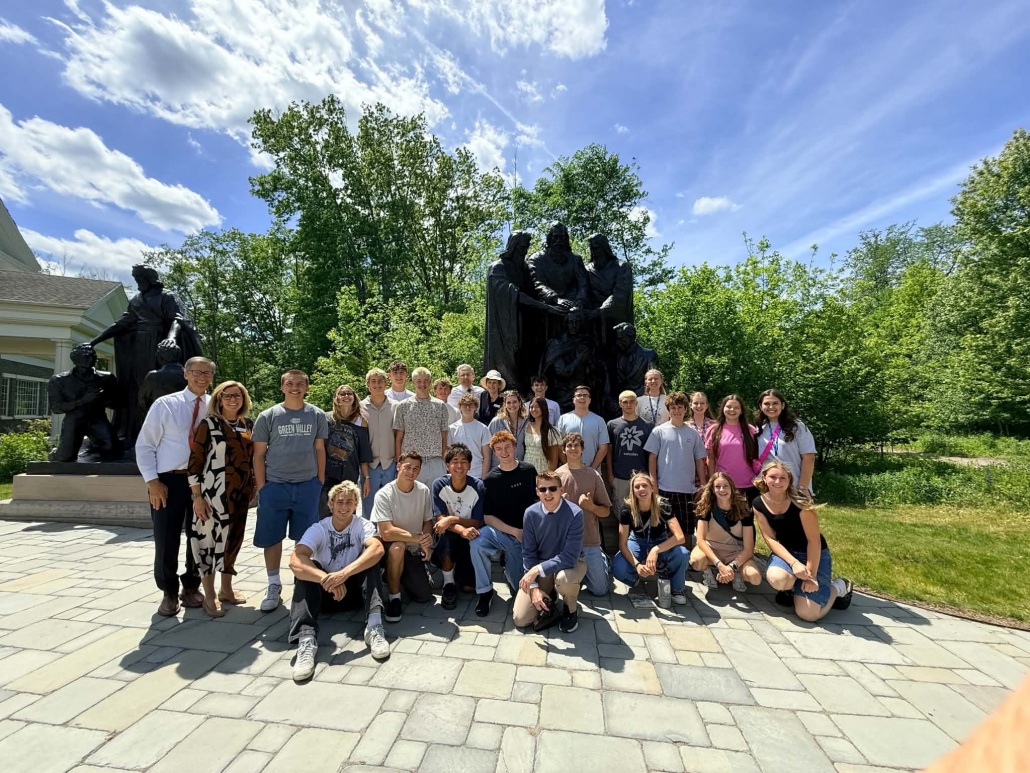
One photograph from our visit to the Priesthood Restoration Site captures much of what I have been feeling.
As I look at this photograph, I am struck by the contrast between the bronze figures behind us and the young faces in front of us.
The statues commemorate a sacred moment in history. The youth gathered before it represent the future. Between those two groups stands my own generation, entrusted with preserving faith, sharing testimony, and helping others find their way.
For me, that is one of the great lessons of pilgrimage: we look back to sacred events not merely to remember them, but to carry their influence forward into our own lives and into the lives of those who follow us.
The events commemorated at that sacred place occurred nearly two hundred years ago, yet their influence continues to shape lives today. Standing there with the young people, I was reminded that every generation must make its own pilgrimage. We can visit the sacred sites, walk the same paths, and learn the same history, but ultimately each of us must gain our own witness.
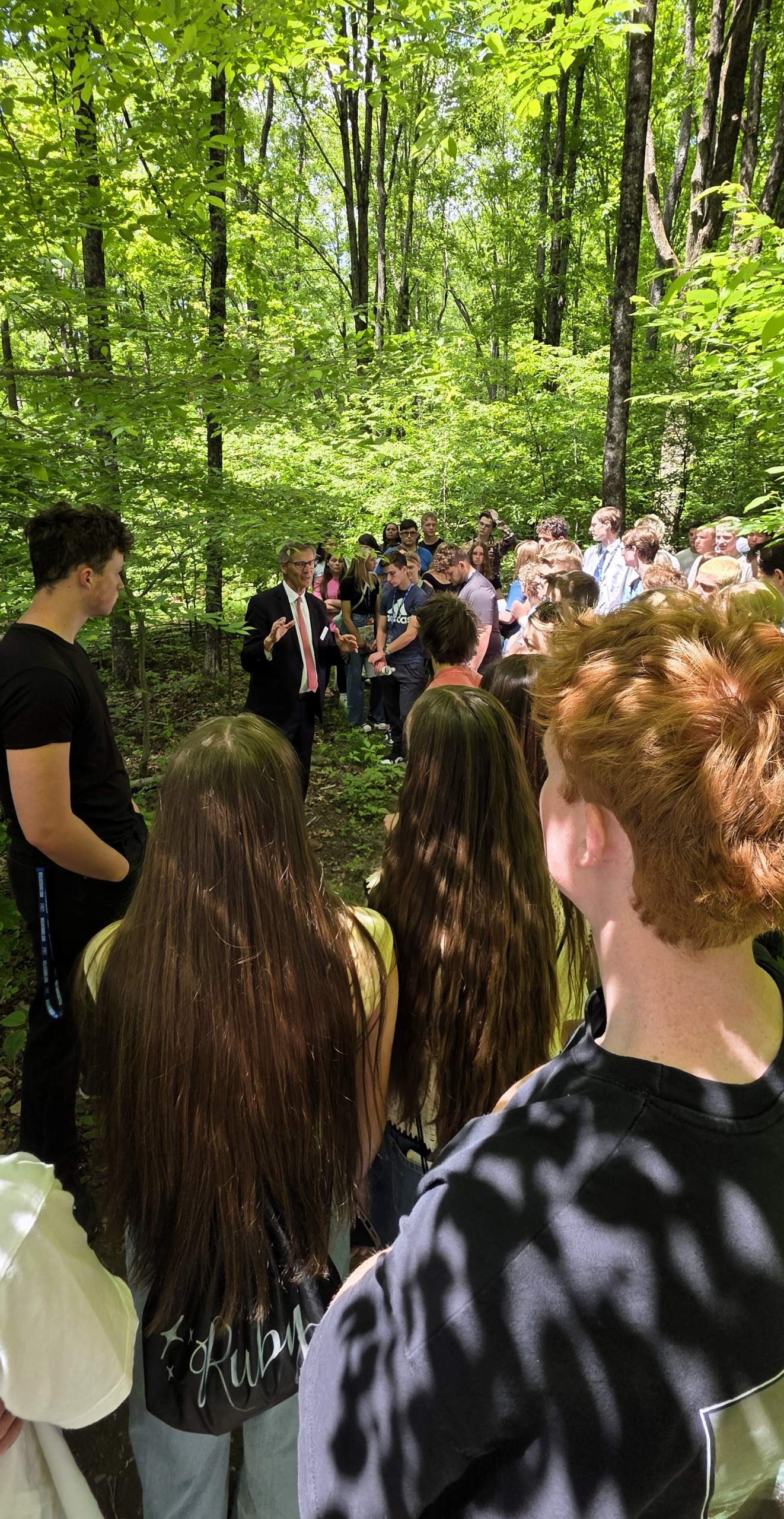 My hope is that, for these youth, this journey will become more than a memorable trip. I hope it will become a milestone in their own lifelong search for truth, faith, and discipleship.
As for me, this pilgrimage has been both a confirmation and a reminder. A confirmation of truths I have long believed, and a reminder that faith is not a destination but a journey. We are all pilgrims, each seeking greater light, greater understanding, and a closer relationship with God.
Like those who sailed on the Mayflower, and like those who sought truth during the Restoration, we continue our journey forward, guided by faith, strengthened by sacred experiences, and grateful for those who have gone before us.
Looking back has indeed helped me look forward.
As you continue your own journey through life, what sacred experiences from your past can help you look forward with greater faith, purpose, and hope?