
Tag Archive for: assumptions

Check the Facts

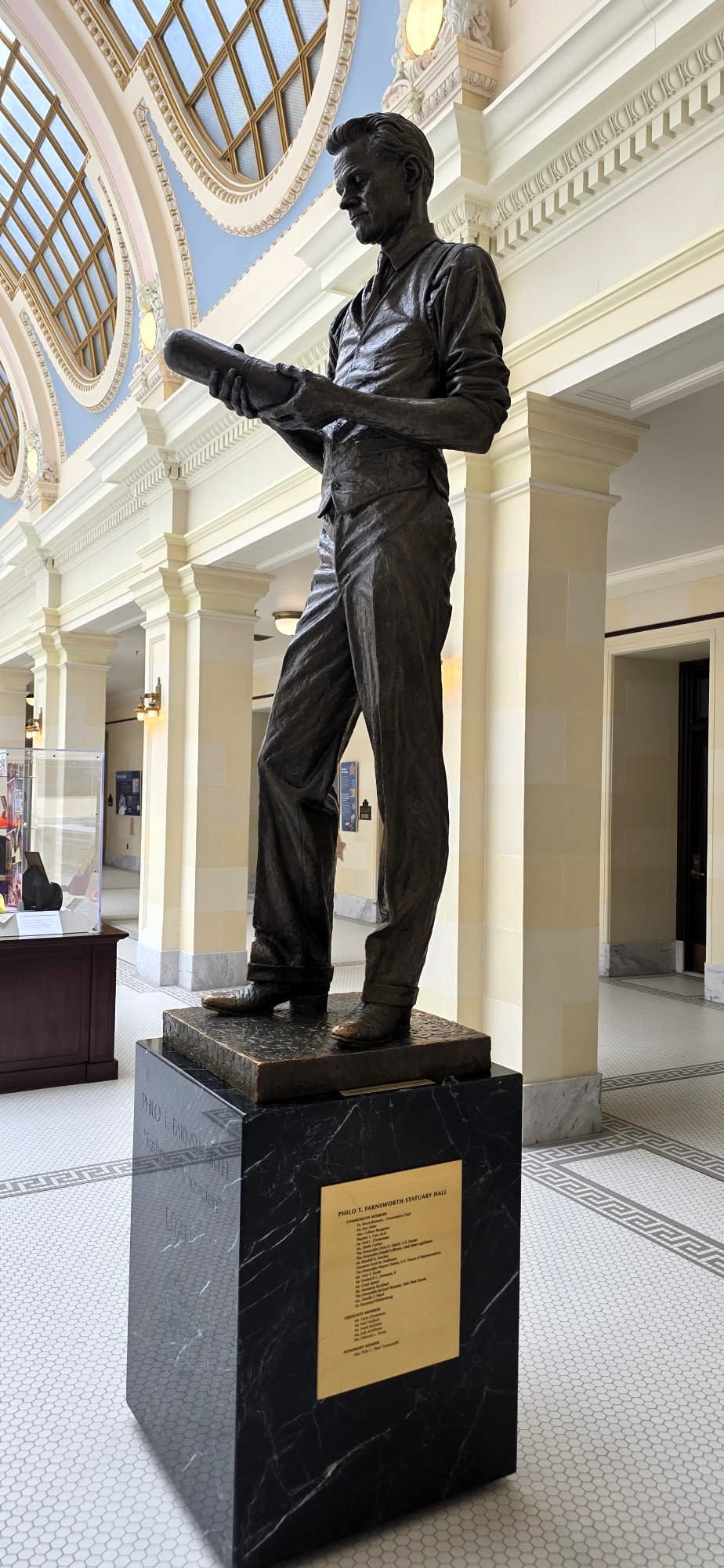
On our recent trip to Utah, Monic and I especially enjoyed our guided tour around the State Capitol Building. Thank you, Amilya, for arranging it and for giving us such a fascinating tour during your internship with the Deputy Governor.
We wandered through the various chambers, admired the murals, climbed the grand staircases and stopped at more than a few statues.
But one statue brought me to an abrupt halt.
“Philo T. Farnsworth – Father of Television – Utah.”
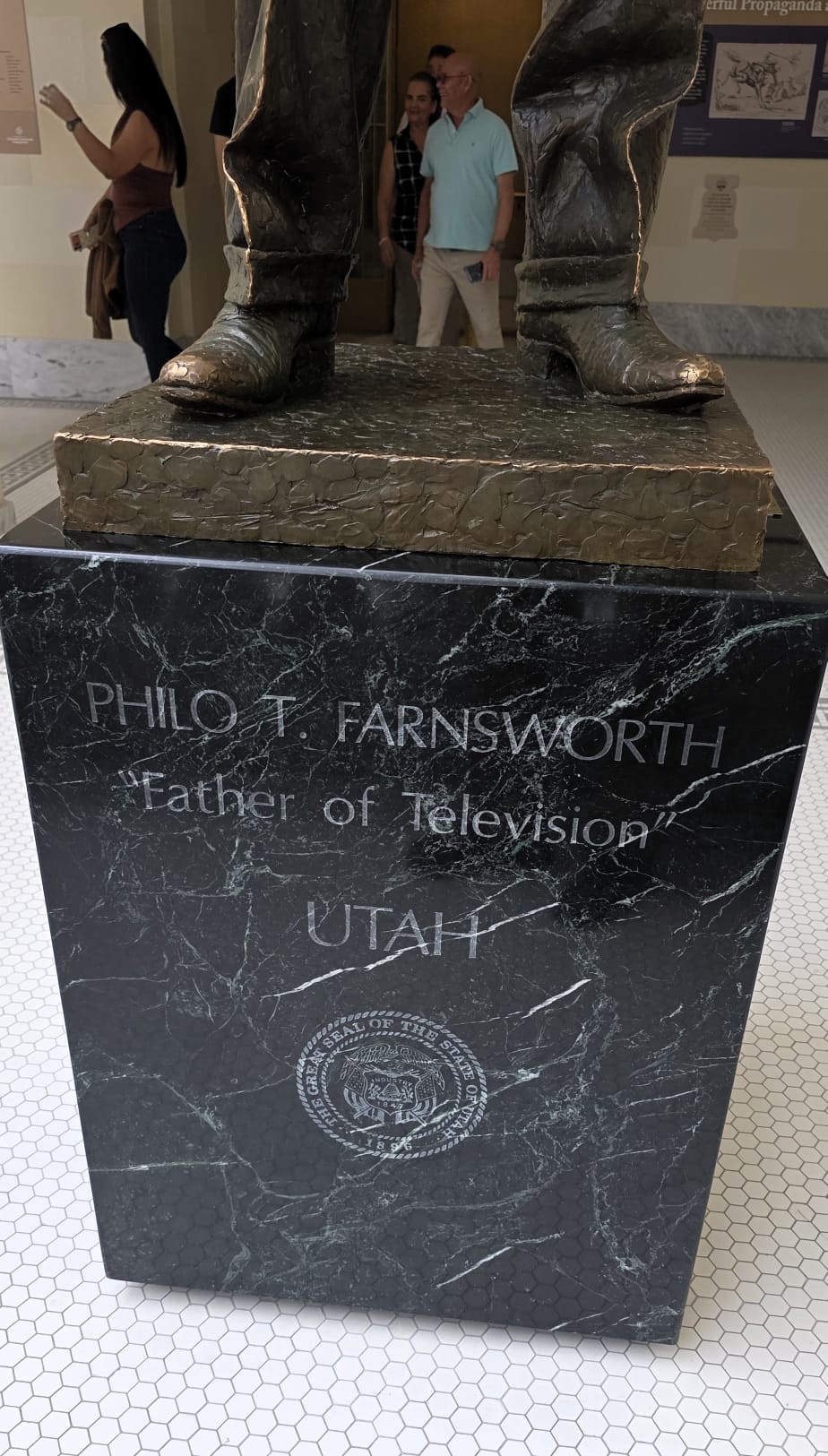
OOHHH… ouch!! 😳
As a proud Scot, I grew up being taught at Primary School that John Logie Baird invented the television. Surely everyone knows that?!
Had the Americans somehow managed to rewrite history while I wasn’t looking? 😄
For a moment, I confess, my Scottish pride was well and truly rattled. There was only one thing for it… Check the facts.
And so, I did!
John Logie Baird was indeed one of the great pioneers of television. In 1926, he gave one of the first successful public demonstrations of a working television system in London.

But Baird’s early system was mechanical. Philo Farnsworth, meanwhile, was developing something different. In 1927, at just 21 years old, he successfully transmitted an image using a fully electronic television system – technology that would become much closer to the television systems that followed.

So… perhaps the Scots and the Americans can both lower their weapons! 😂
Baird helped prove that television could work, then Farnsworth helped develop how electronic television would work.
And, as with so many inventions, the fuller story involves several brilliant people building, experimenting and improving upon one another’s ideas.
It also left me thinking about something much bigger than television.
Sometimes we react before we investigate.
We see a headline, hear one side of a story, notice someone’s behaviour, read an email, sit in a meeting and then very quickly we create a conclusion!
I know that in leadership and coaching, that can be dangerous. It is my experience that we remain non-judgemental.

Like me in the Capitol Building, the first explanation we reach is not always wrong, but rather, it is often incomplete.
Good leaders remain curious a little longer, by asking another question or listening to another perspective. They separate what they know from what they have assumed.
Sometimes the most useful coaching question is simply: “What else might be true?”
My childhood Primary school lesson about John Logie Baird wasn’t wrong, it just wasn’t the whole story.
And standing beneath a statue in Utah, some fifty-odd years after Primary School, I learned a little more about television…
…and perhaps a little more about leadership too.
Check the facts, stay curious and be willing to discover that there may be more to the story.
When was the last time you discovered that what you believed was only part of the story?

The Missing Piece

Arriving at Kyle and Emily’s on Saturday evening, we found them busy with a jigsaw puzzle they’d been slowly working through for weeks. It wasn’t just any puzzle. It was a brilliant photo of Emily’s dad, Steve, leaning into a corner on his motorbike. A great Christmas gift and clearly a labour of love.

Early Sunday morning, I had a little time on my hands, so I sat down and decided I’d tried to fill in a few of the missing pieces.

My strategy was simple. Focus on one gap and find that piece first, patiently sifting through every spare piece on the table.

One by one. Carefully. Methodically. Thoroughly.

Sadly – none of them fitted.

After a half hour of effort, I reached a logical conclusion… “There must be a piece missing.”

Shortly afterwards, I announced over breakfast that the puzzle was clearly incomplete.

Emily calmly replied, “Did you look under the table?

I had not… Under the table was… a whole box of additional pieces.

Starting Over…

Another 15 minutes of careful searching. Still nothing. At this point I’d handled what felt like hundreds of pieces and was fairly certain the universe was against me.

Emily wandered over, glanced in the box, paused for a second, picked up a single piece and slotted it straight in.

Perfect fit…

I’d invested close to an hour.

She invested about ten seconds…. Grrr.

It struck me that this wasn’t really about jigsaws at all, rather it was a reminder about perspective.

I was focused on effort. If I just worked harder and examined every option, I’d eventually get there. Emily approached it differently. She looked at the bigger picture. The colours. The shape of the gap. The context. She wasn’t just searching pieces. She was thinking about the whole image.

In leadership, we often default to our own viewpoint. We double down. We try harder. We stay at the table longer. But sometimes the answer isn’t about more effort. It’s about a different lens.

The piece isn’t missing. It’s just in a box we haven’t looked in yet.

And occasionally, the smartest move is inviting someone else to look at the puzzle with you.

Different hands. Different eyes. Different viewpoints.

Same picture.

Usually, a much faster solution.

Who could offer a fresh perspective on a challenge you’re facing?

The List

Preparing to go shopping this morning, Monic asked “Have you seen the shopping list?”
“No” I responded.
“Would you mind going to look for it in the car, I think I may have left it in my jacket?” – she said.
Off I went.
I checked in the car and looked in her jacket pockets.
“Nothing there” I remarked.
“It may be upstairs” said Monic, and off she went.
Then I stated, “I’ll just put the bins out whilst you look.”
Off I went out back into the garden pulling two wheelie bins and put them beside all the other bins on the street for collection.
I came back inside via the back door and waited in the living room.
I got distracted by a message on my phone.
Then I waited a while longer.
“What a time she is taking” I thought.
The doorbell rang.
“Who can that be so early?” I thought.
I opened the door.
It was Monic!
I was perplexed, I thought she was upstairs!
“What are you doing, I’m waiting in the car” she said…
We smiled.
Then we laughed.
Actually, we laughed a lot!
“We’re all a little weird. And life is a little weird. And when we find someone, whose weirdness is compatible with ours, we join up with them and fall into mutually satisfying weirdness–and call it love–true love.” — Robert Fulgham, American author
© Copyright 2024 Daryl Watson. All Rights Reserved. Registered in Scotland, Company Number SC473068