
Check the Facts
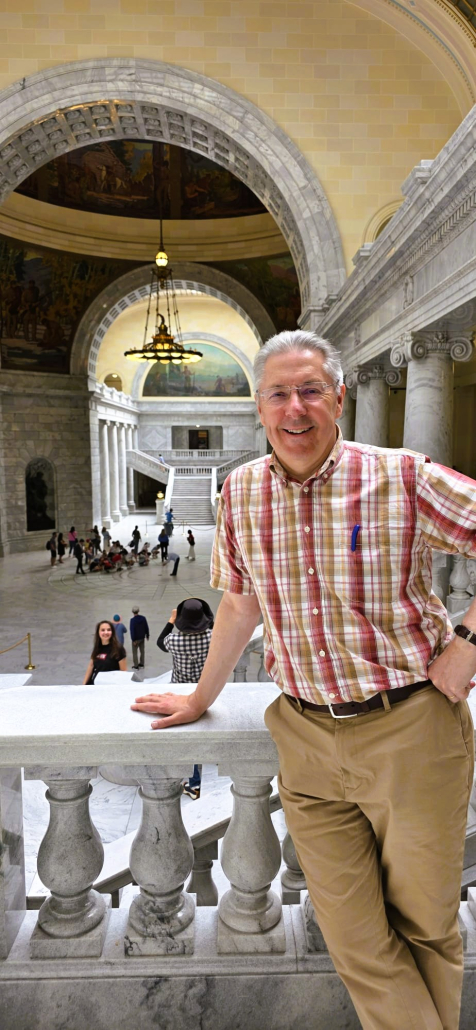
On our recent trip to Utah, Monic and I especially enjoyed our guided tour around the State Capitol Building. Thank you, Amilya, for arranging it and for giving us such a fascinating tour during your internship with the Deputy Governor.
We wandered through the various chambers, admired the murals, climbed the grand staircases and stopped at more than a few statues.
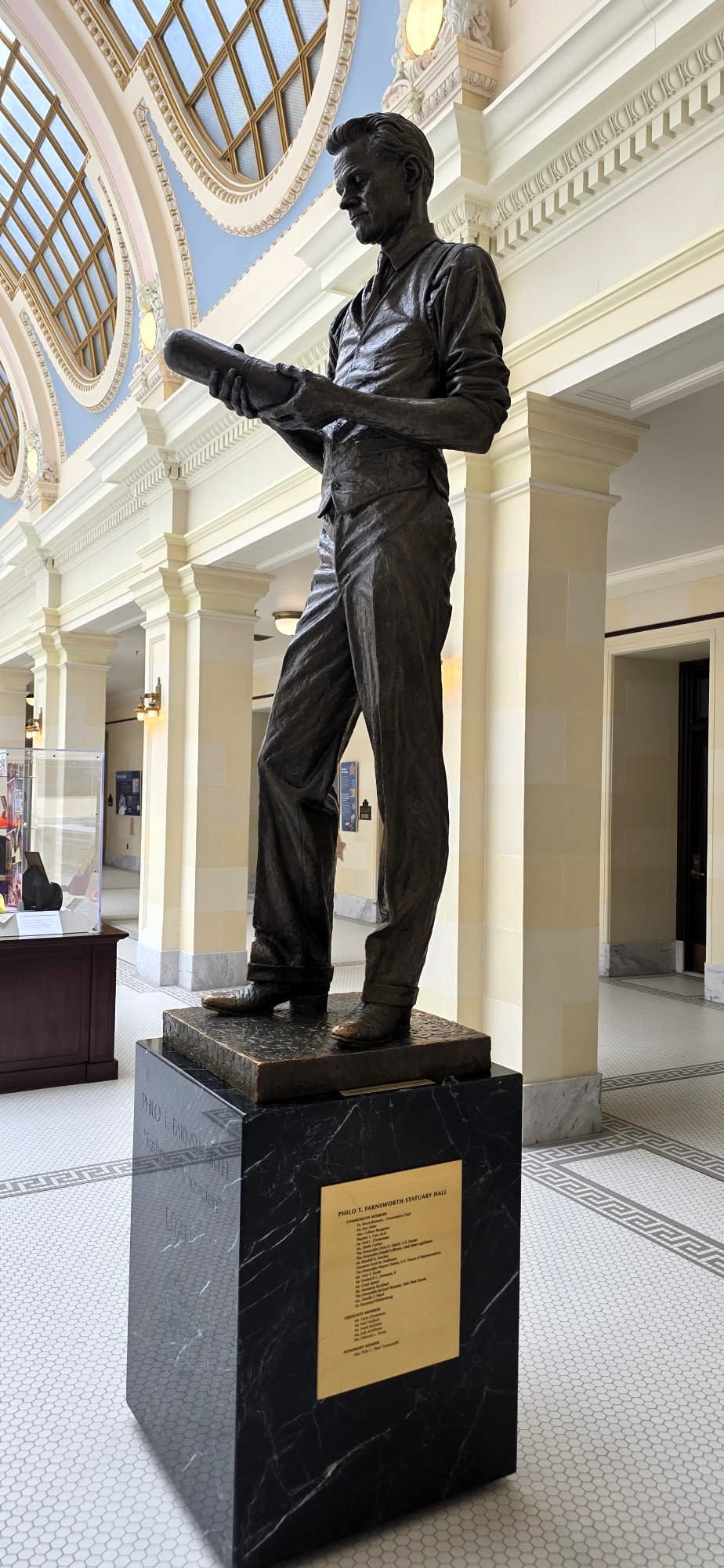
But one statue brought me to an abrupt halt.
“Philo T. Farnsworth – Father of Television – Utah.”
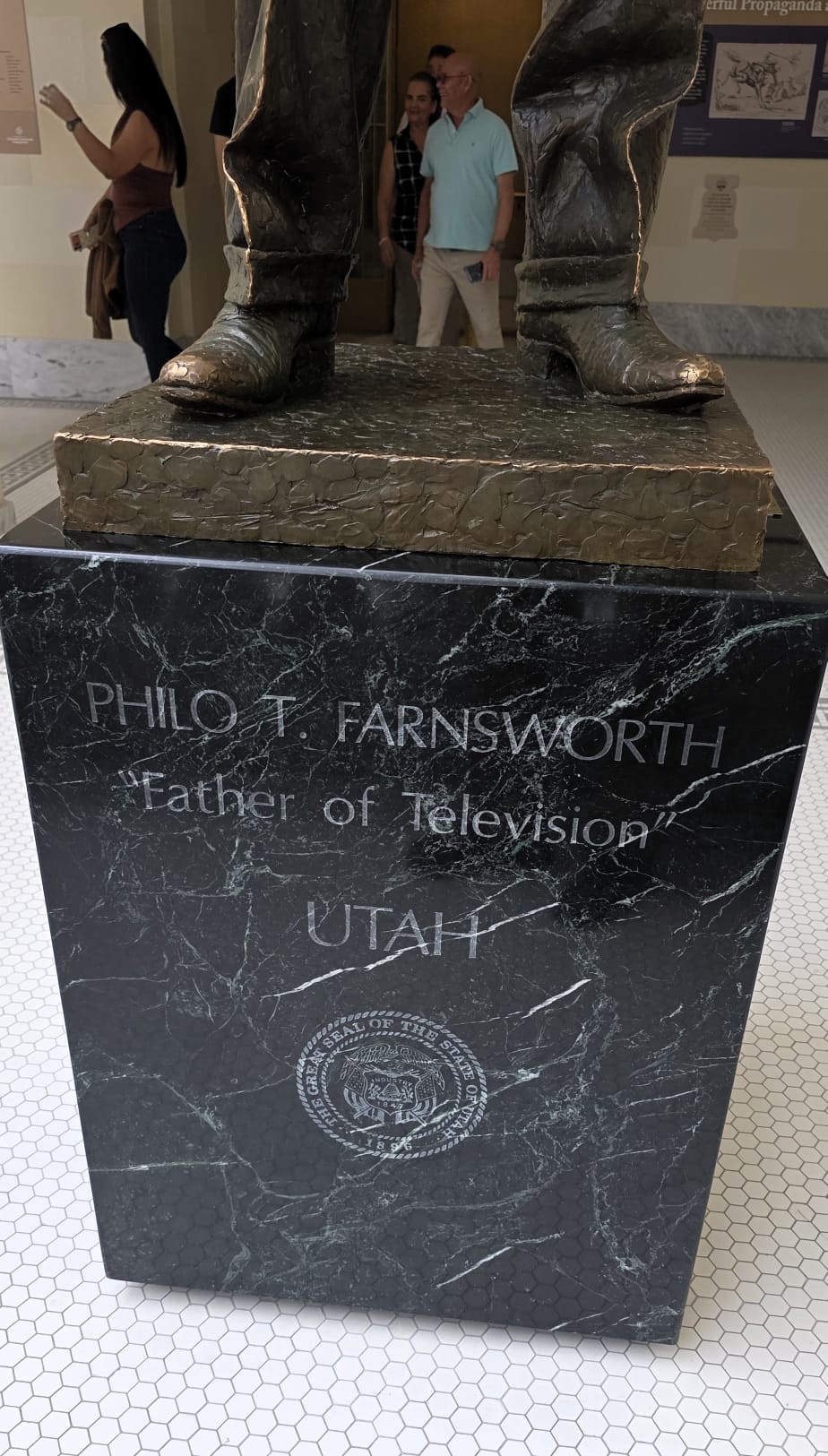
OOHHH… ouch!! 
As a proud Scot, I grew up being taught at Primary School that John Logie Baird invented the television. Surely everyone knows that?!
Had the Americans somehow managed to rewrite history while I wasn’t looking? 
For a moment, I confess, my Scottish pride was well and truly rattled. There was only one thing for it… Check the facts.
And so, I did!
John Logie Baird was indeed one of the great pioneers of television. In 1926, he gave one of the first successful public demonstrations of a working television system in London.
But Baird’s early system was mechanical. Philo Farnsworth, meanwhile, was developing something different. In 1927, at just 21 years old, he successfully transmitted an image using a fully electronic television system – technology that would become much closer to the television systems that followed.
So… perhaps the Scots and the Americans can both lower their weapons! 
Baird helped prove that television could work, then Farnsworth helped develop how electronic television would work.
And, as with so many inventions, the fuller story involves several brilliant people building, experimenting and improving upon one another’s ideas.
It also left me thinking about something much bigger than television.
Sometimes we react before we investigate.
We see a headline, hear one side of a story, notice someone’s behaviour, read an email, sit in a meeting and then very quickly we create a conclusion!
I know that in leadership and coaching, that can be dangerous. It is my experience that we remain non-judgemental.

Like me in the Capitol Building, the first explanation we reach is not always wrong, but rather, it is often incomplete.
Good leaders remain curious a little longer, by asking another question or listening to another perspective. They separate what they know from what they have assumed.
Sometimes the most useful coaching question is simply: “What else might be true?”
My childhood Primary school lesson about John Logie Baird wasn’t wrong, it just wasn’t the whole story.
And standing beneath a statue in Utah, some fifty-odd years after Primary School, I learned a little more about television…
…and perhaps a little more about leadership too.
Check the facts, stay curious and be willing to discover that there may be more to the story.
When was the last time you discovered that what you believed was only part of the story?