The Sugar Snap Incident
Recently, we arrived in Philadelphia for a church history tour, full of excitement and ready for ten days in the States.
Then came the question at security and customs: “Are you carrying any fruit or vegetables?”
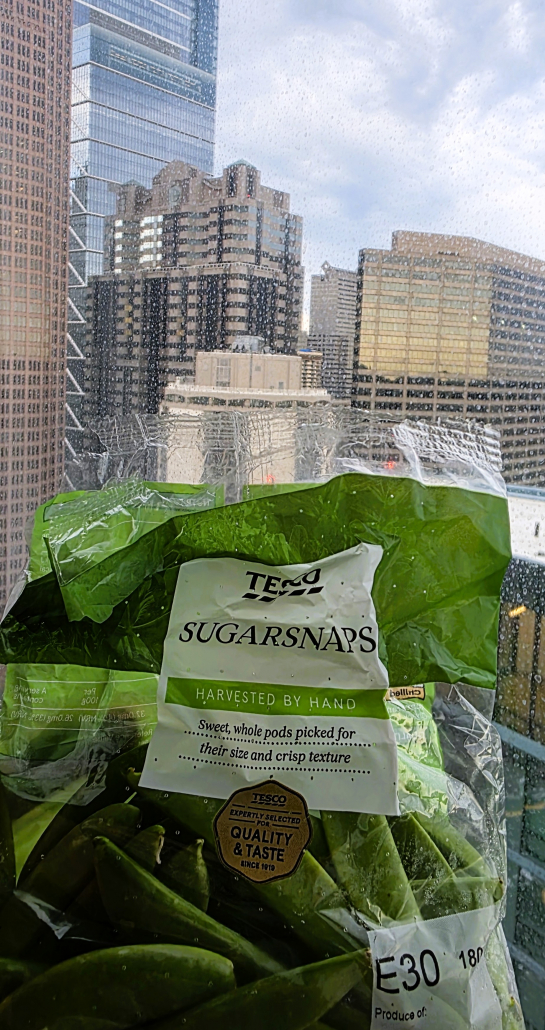
Monic answered first and mentioned the sugar snaps. The immigration officer gave us a rather quizzical look, and before the conversation got any further, we were being directed to a second check. Once there, I added my two apples to the list.
Apparently, sugar snaps and two apples are enough to begin an international incident.
Our passports were taken. We were told not to use our mobile phones. We were asked to sit and wait while our other luggage was collected.
Waiting…
At this point, our imaginations went into overdrive.
Would they open every suitcase?
Would they go through our belongings item by item?
Would they confiscate half our luggage?
Would they let us into the country at all?
Would we be remembered forever as “𝒕𝒉𝒆 𝒔𝒖𝒈𝒂𝒓 𝒔𝒏𝒂𝒑 𝒄𝒐𝒖𝒑𝒍𝒆”?
To make matters worse, Monic had actually wanted an apple on the plane, but they were in the overhead locker and we never quite got to them. Her plan had been to eat one once we landed.
Now, sitting in the waiting area, she began quietly debating whether she should just eat it there and then.
This felt risky. We had already been stopped for sugar snaps. Eating the evidence in a customs waiting area felt like the sort of thing that might not move things in our favour.
So, we sat there, trying to look calm, innocent and deeply law-abiding, while quietly catastrophising on the inside.
Eventually, after about half an hour, our luggage arrived. We were asked a few more questions.
The apples were taken away, probably to wherever forbidden apples go. Then, after checking some kind of database, the sugar snaps were declared safe.
We immediately wished we’d just eaten the apples on the plane.
All our luggage was scanned again and, at last, we were free to enter the USA.
The relief was real.
We had made it.
𝐋𝐞𝐚𝐝𝐞𝐫𝐬𝐡𝐢𝐩 𝐋𝐞𝐬𝐬𝐨𝐧: sometimes small things can create unexpected delays, especially when we are crossing into unfamiliar territory.
As leaders, it is easy to catastrophise when things don’t go to plan.
But often the best response is simple: stay honest, stay calm, answer the questions in front of you, and don’t let a temporary hold-up convince you that the whole journey is over.
Also, when in doubt, eat the apples before landing.
What helps you stay calm when a small issue suddenly feels much bigger than it is?