A Matter of Manner
Recently, Monic and I met with a doctor about a medical matter.
We left however feeling a little less reassured than we had hoped, not because we questioned his expertise, but because something in the conversation didn’t quite connect for us.
We also recognise that medical professionals carry pressures we cannot see, and that one brief encounter never tells the whole story. Even so, it prompted me to reflect on how much the manner of a difficult conversation matters.
The experience got us thinking about the phrase 𝒃𝒆𝒅𝒔𝒊𝒅𝒆 𝒎𝒂𝒏𝒏𝒆𝒓.
It has very little to do with the bed and almost everything to do with the manner: how someone speaks, listens, asks questions, explains difficult things and responds to another person’s vulnerability.
And it struck me that bedside manner doesn’t belong only to medicine.
Leadership
𝑬𝒗𝒆𝒓𝒚 leader has one too.
It shows up when we have to share difficult news, challenge someone’s behaviour, address poor performance, navigate uncertainty or simply sit with someone who is struggling.
There may be no hospital bed in the room, but the other person can still feel exposed, worried or vulnerable.
On our Lead the Way programmes with Aviva, we spend a lot of time considering leadership behaviours such as crucial conversations.
We explore respect, active listening, empathy and thoughtful questions. We consider not only what needs to be said, but how we help another person feel safe enough to hear it and able to respond honestly.
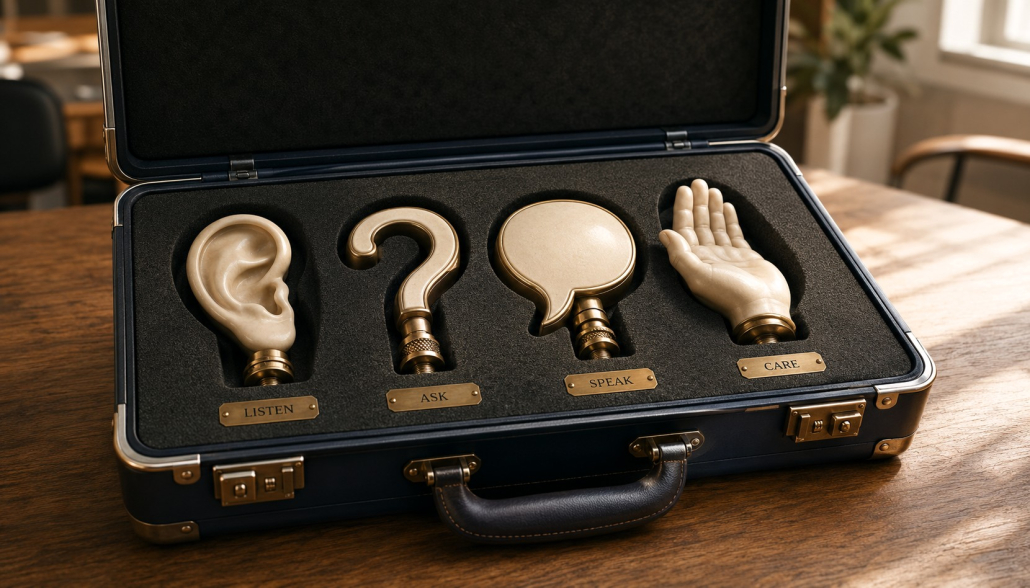
The image below looks like a professional toolkit—but it contains no ordinary instruments. Instead, there is an ear for listening, a question mark for curiosity, a speech bubble for honest conversation and an open hand for empathy and respect.
Expertise matters. So does authority. But neither automatically creates trust.
Whether we are doctors, lawyers, leaders, call handlers, coaches or colleagues, difficult conversations call for the same human tools.
Trust is often formed in the manner we bring to the moment: in our tone, our questions, our willingness to listen and the care we show when the conversation becomes difficult.
People may forget the precise words we use, but they rarely forget whether they felt heard, understood and valued.
What do people experience in the “bedside manner” you bring to crucial conversations?